

































Pounding the lion: Cambodia’s hidden martial art of Bokator

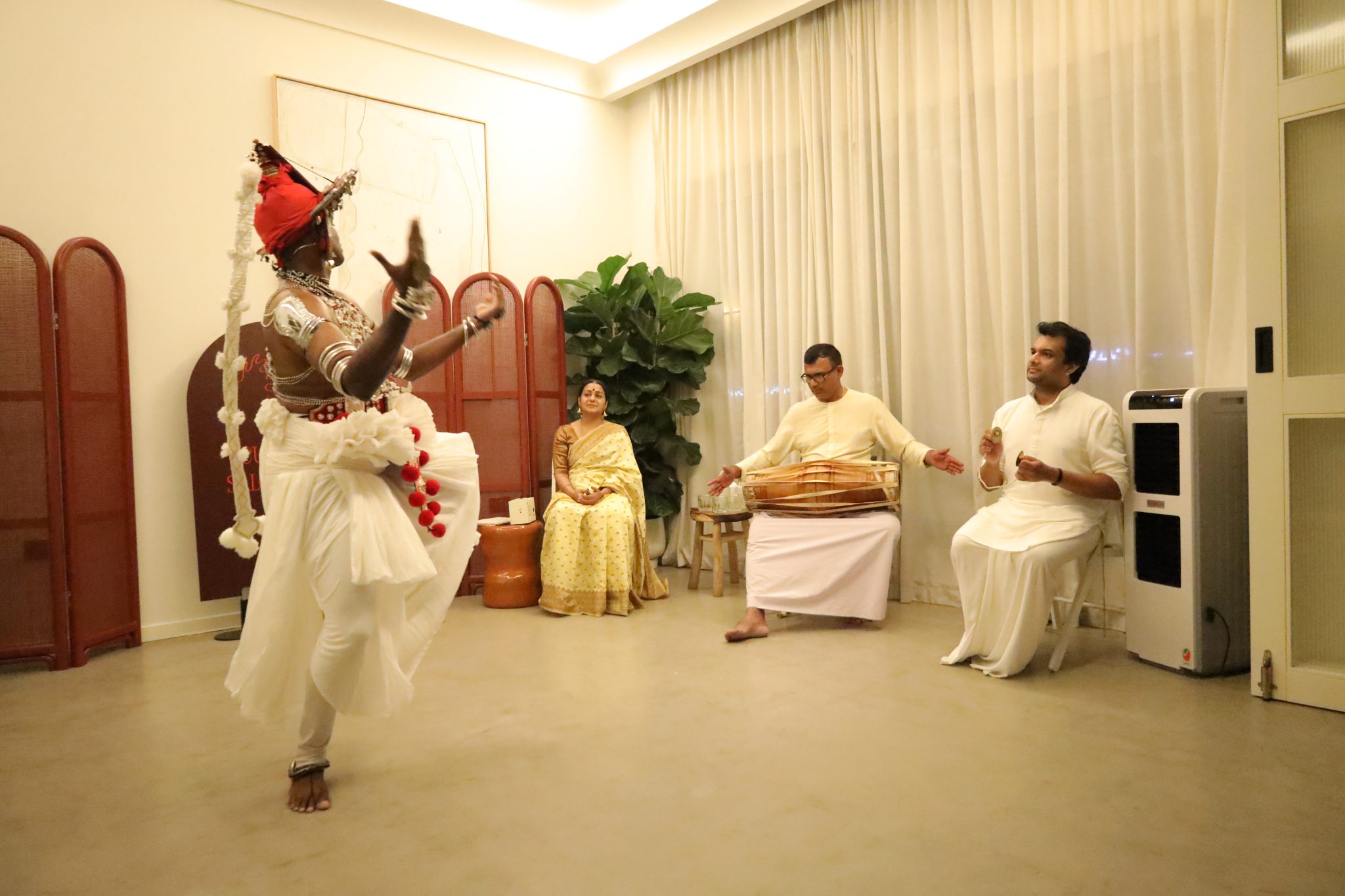
I’ve been living in Cambodia for over a year now, but my exposure to Bokator only deepened recently. After watching a performance, all I could think about was the raw beauty of it — people like me and you, embodying the movements of true warriors, passed down for millennia.
So what is Bokator, you ask? While the world obsesses over martial arts such as Boxing, BJJ (Brazilian Jiu Jitsu), and MMA (Mixed Martial Arts), Cambodia has been quietly preserving something far more primal: Bokator, or Kun Lbokator, one of the oldest fighting systems in the world. The term comes from “bok tao” meaning “to pound the lion.” Bokator is the original fighting system of Southeast Asia, emerging long before more popular practices from the region such as Muay Thai or Khun Khmer.
The late Bokator Grandmaster San Kim Sean, explained in an interview:
“In the far past, our ancestors thought a lot about survival. They were living primitively and indigenously. So, their livelihood revolved around the art of fighting. They were influenced by the movements of wild animals. More than that, some of the combat movements were also adopted from the movements of plants and kinds of trees.”
As a battlefield art, Bokator wasn’t originally meant for spectators. Masters and students trained behind closed doors, guarding their techniques like military secrets, because that’s exactly what they were. Grandmaster San Kim Sean explained that Bokator masters never taught all of their techniques to their students. They always held back about ten percent, incase a student ever attacked them.
Allow me to share the ancient art of Bokator with you.
The body as a weapon: How Bokator techniques emulate nature
What fascinates me most about this martial art is that the movements and techniques, created around 2,000 years ago, were inspired by wildlife.
Imagine ancient Khmer warriors crouched in the jungle, watching. A king cobra rears back, body coiling with perfect tension before striking with explosive speed. Wild boars charge with unstoppable momentum. Bamboo trees bend in monsoon winds without breaking.
The fluid strike. The charging power. The flexible strength. Bokator contains thousands of techniques organized around these natural movements, creating fighters who could adapt to any situation like the animals and plants that lead by example.
These warriors didn’t just observe, they embodied what they saw, transforming nature’s lessons into a fighting art that would survive for over two millennia. In an era before gyms and training equipment, nature was the ultimate teacher — and those lessons, refined over centuries, created one of the most comprehensive fighting systems the world has ever known.
Khmer Bokator represents a full-spectrum martial art where every part of the body serves as a weapon, combining striking, throwing, trapping, and locking techniques for attack and defense.
The documentation of Bokator on ancient temple walls
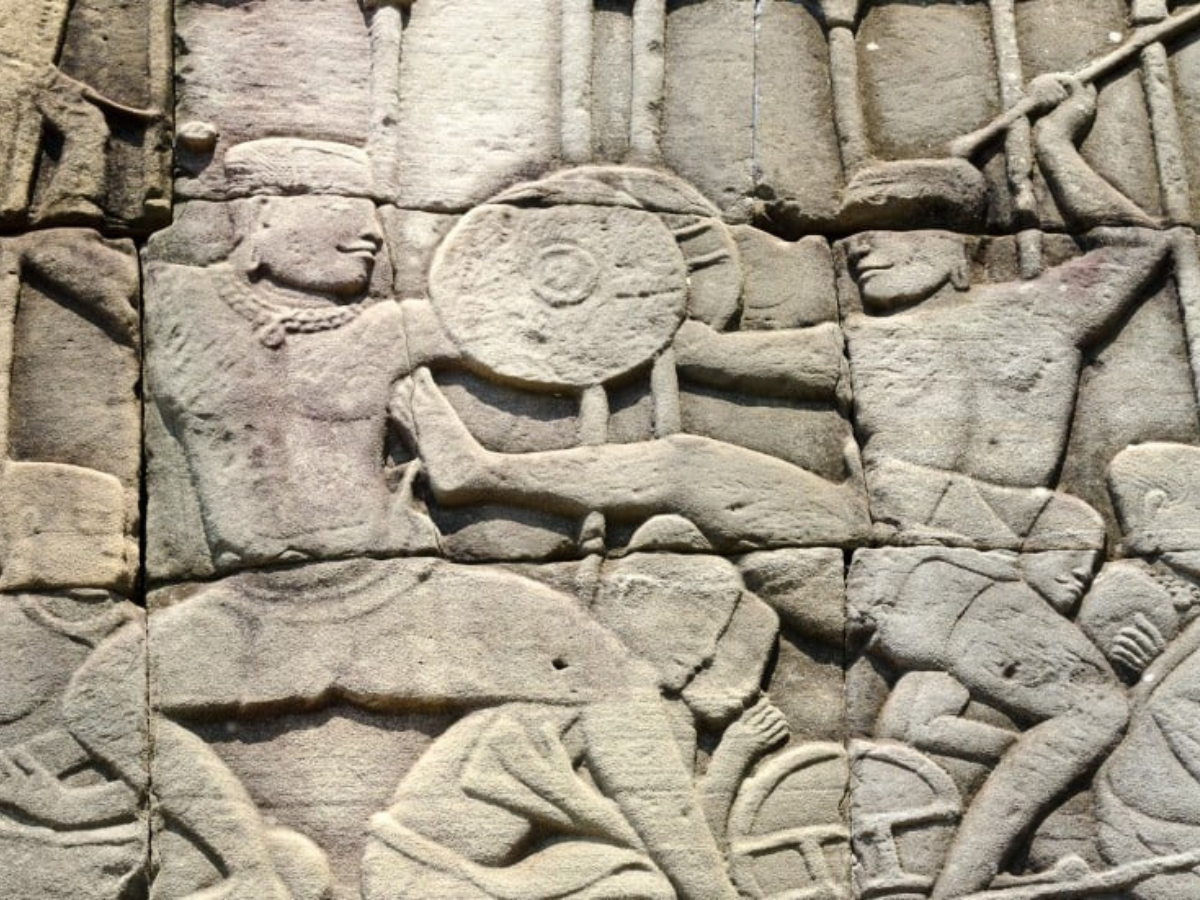
What’s even more fascinating? Being much older than the Khmer empire itself, precise Bokator techniques have been preserved through carvings on the walls of the largest religious monument in the world: Angkor Wat, as well as some of the many Angkorian temple ruins still standing around Cambodia.
Walk through Angkor Wat today and you’ll see them — warriors frozen mid-strike on temple walls, their bodies twisted in techniques that Bokator practitioners still use today. These carvings aren’t just decoration, they’re documentation; a stone library of combat knowledge preserved by the Khmer Empire over 800 years ago.
The attempted erasure of Bokator
Between 1975 and 1979, the Khmer Rouge emerged and sought to erase Cambodia’s past, committing one of the most devastating genocides and attempted cultural erasures in recent history.
The Khmer Rouge hunted anyone who appeared educated — even just people who wore glasses. This made Bokator masters targets: the ancient combat knowledge they carried in their bodies and memories was considered dangerous. It was forbidden to be equipped with the kind of killing power that a martial art like Bokator teaches.
Grandmaster San Kim Sean, who managed to escape and survive Cambodia’s darkest era, explained in an interview: “I don’t have to tell you the Pol Pot [Khmer Rouge] time was bad… My group began with 10,000-13,000 people. Two years later, only five hundred were still alive. They were either murdered or died of hunger.” The Khmer Rouge killed 2 of his children as well as all of his students and training bothers.
Many masters never made it out alive. Some of the knowledge, techniques, variations and secrets unique to their lineages, were lost over the years — and yet, with the perseverance of a few, especially Grandmaster San Kim Sean, the art managed to live on to this day.
Bokator: The martial art that refused to die
In 2022, UNESCO officially recognized Bokator on the representative list of the Intangible Cultural Heritage of Humanity.
Today, when students bow before training and perform their rituals, they’re continuing a conversation their ancestors began thousands of years ago.
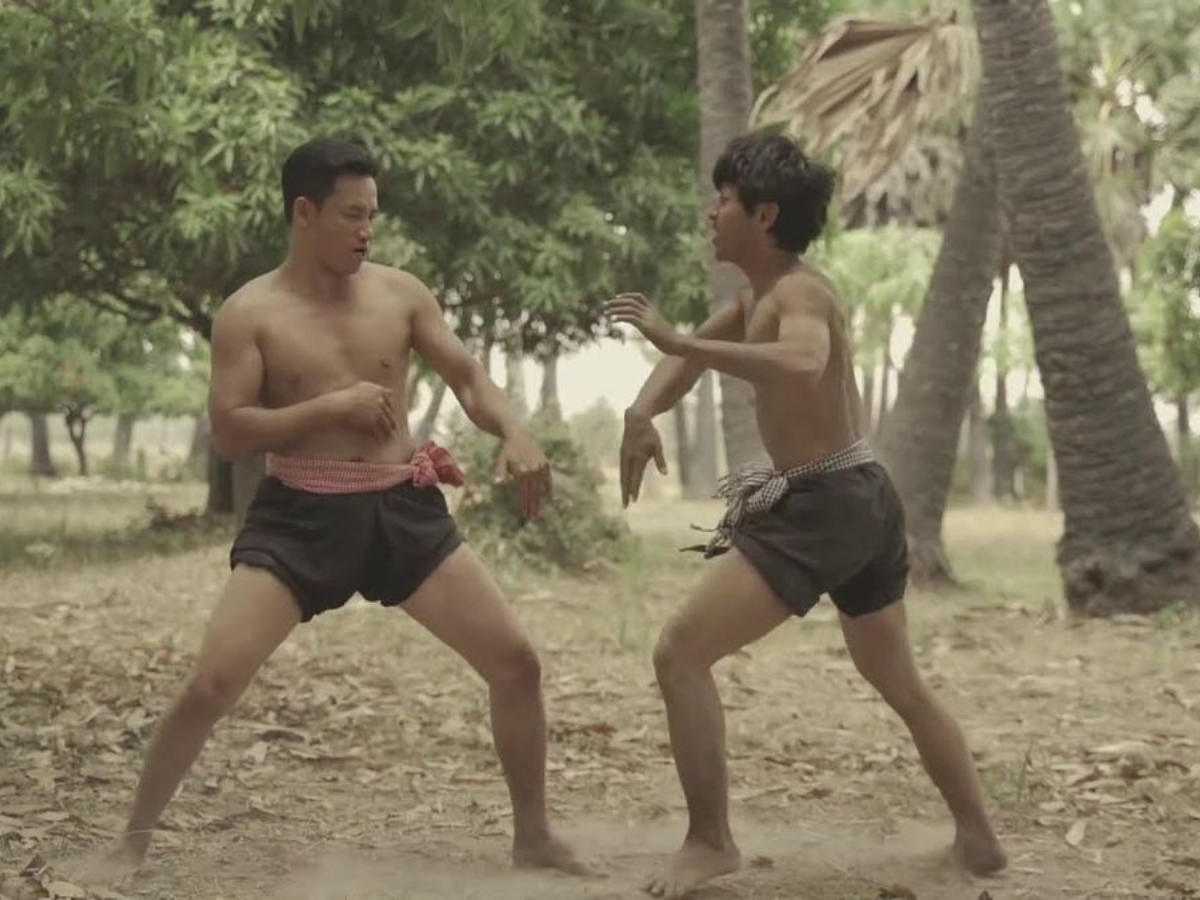
Young Cambodians still tie on their kramas and step onto training mats, learning to move like the forces of the wild — keeping alive not just combat techniques, but a sacred art that nature itself helped write and that no tyrant regime could ever fully erase.
— Ghina Fahs