






Third culture kids and our post-colonial dilemmas
In-between worlds — that’s what it feels like. The post-colonial dilemma that generations of migrants and third culture kids from across the global South and East face every day. Whether pushed out of the land we belong to or choosing to leave for broader opportunities, many of us find ourselves in a shared liminal space.
It’s a limbo that wakes us up to the reality of migration within a colonial matrix. That is, where the new world you take part in becomes familiar, but never fully — while the world you came from slowly loses its potency, but never fully either.
I myself have been grappling with this, and I know I’m not alone. It’s raising questions that I’m sitting with, without rushing for an answer. I thought I’d share some of them with you, not only to invite you to reflect, but also to remind you you’re not alone. Let the questions marinate.
On belonging in-between worlds
In Tayeb Salih’s brilliant novel, Season of Migration to the North, the Sudanese character Mustafa Sa’eed says, “I came as an intruder and I lived as an intruder.” He’s speaking about his time in England, about never quite belonging in the colonizer’s land despite his education, his fluency, and his performance of their culture.
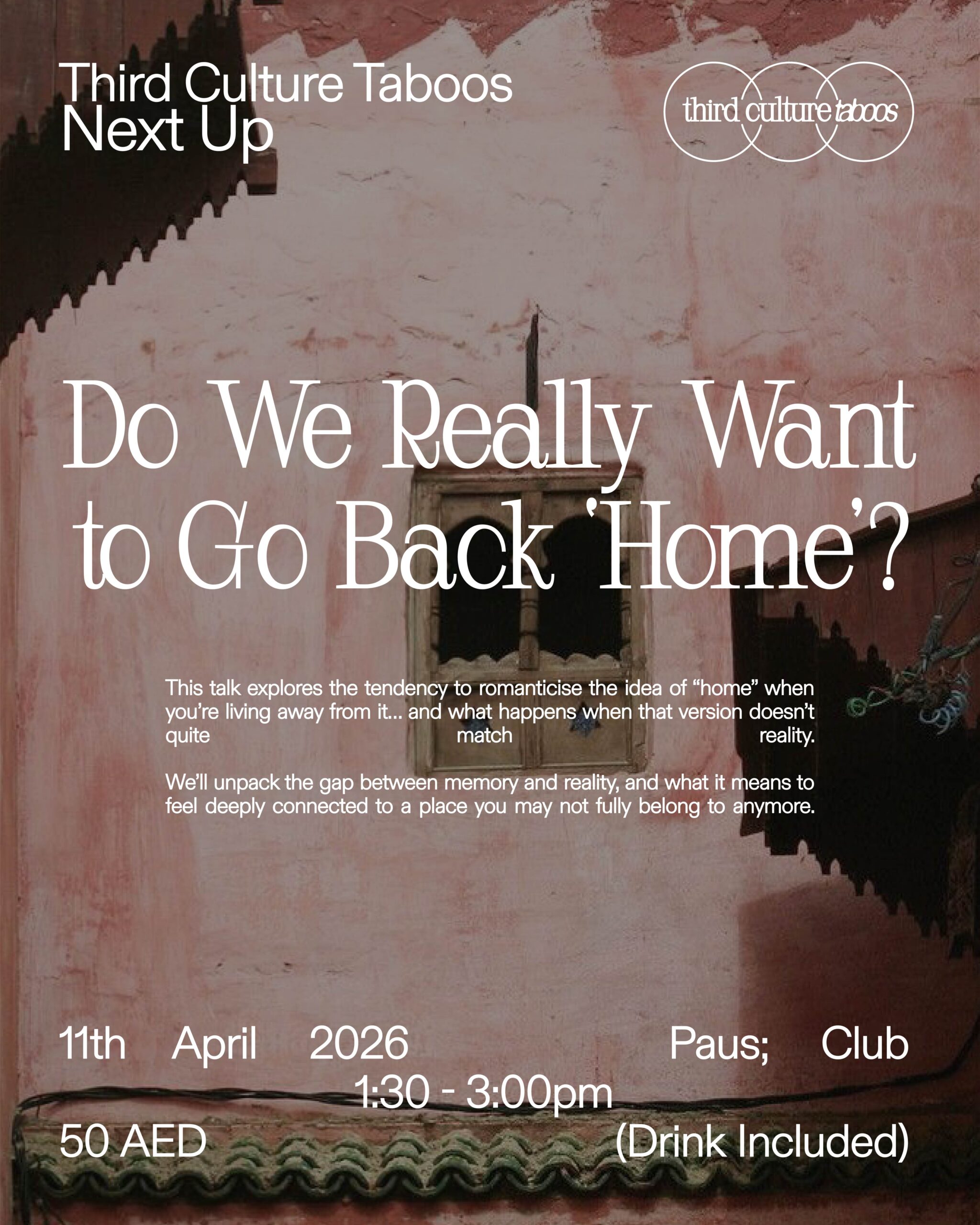
Most, if not all of us, tell ourselves that we’ll go back someday. That this displacement is temporary, and that home is waiting for us just as we left it. But when we actually return, for holidays, weddings, funerals — something feels different.
The place exists, the streets are the same, and the food tastes better than ever. But we don’t quite fit in anymore, at least not in the way we once did. We’ve changed, yes, but so has home. It’s moved on without us, in ways we weren’t there to witness or be a part of.
Here, the difficult question demands to be asked: Am I a foreigner in my homeland now, too?
The colonial trap
Get this: the opportunities we’re chasing, the “better lives” we’re building — they’re often in the very nations that colonized and extracted from ours. To me, there’s something deeply unsettling about this. It feels like an obvious colonial trap.
Moving to the colonizer’s land means that we are bound to encounter colonial programming, which is designed to rewire how we see ourselves, our people, our land. And even when we reject it intellectually, it makes its way inside us.
We participate in systems that continue to devalue our origins even as we seek validation within them. We learn their languages, adopt their metrics of success, or reshape ourselves to fit their standards. Migration within this colonial matrix isn’t just geographical movement, it’s often also a subsequent dilution of culture and an abandonment of ancestry.
Doesn’t that seem like a continuation of something much older, much more insidious? Aren’t we still being told, implicitly and explicitly, that what and where we come from isn’t enough?
How much is in our hands?
Most colonizers are known to intentionally destabilize and weaken regions with the aim to not only transform other cultures to fit their standards, but also to benefit from the labor of the colonized. However, are we noticing when we perpetuate the work of the colonizer unto ourselves?
The gradual erosion of language. Speaking to our children in English or French because we think it’ll give them a better shot. Dismissing traditional knowledge as backwards or superstitious. The quiet shame we learn to feel about our accents, our food, our ways of being. This is colonization too, just more discreet, wearing the mask of pragmatism or progress.
What might it look like then, when we refuse erasure? And when we take the intentional effort to decolonize our own minds?
What about the next generation? What inheritance are we leaving them — this hyphenated existence, this nostalgia for places they’ve never known, this feeling of being too much of one thing here and not enough of it there? How do we teach them to honor roots they may never fully understand, in soil they may never touch?
These questions feel especially sharp because the truth is, none of us chose this. We didn’t design the system that keeps us living in limbo, but we do have a responsibility to persist.
What we’re left with…
Whether we’ve been born and raised abroad or we set sail a little later in life, wherever we plant ourselves becomes a part of us. It’s inevitable, a different environment binds us to be altered by it — but this isn’t the problem. Mobility and freedom to explore the whole of the Earth are natural, fundamental aspects of our human existence. In the context of colonisation, however, mobility becomes less about freedom and more about control, doesn’t it?
Is it really still considered freedom and mobility if the cost is abandoning our culture, forgetting our mother tongue, and feeling like foreigners on our own grounds?
I don’t have solid answers to any of this and I’m not sure who might. But maybe existing in this liminal space, acknowledging it, refusing to pretend it doesn’t ache — maybe that’s its own form of resistance. Maybe that’s how we start to redefine what home means when the old definitions no longer hold.
— Ghina Fahs
(All photo credit goes to respective owners, sourced from search engines)