



















Sak Yant: The sacred tattoo tradition of Southeast Asia
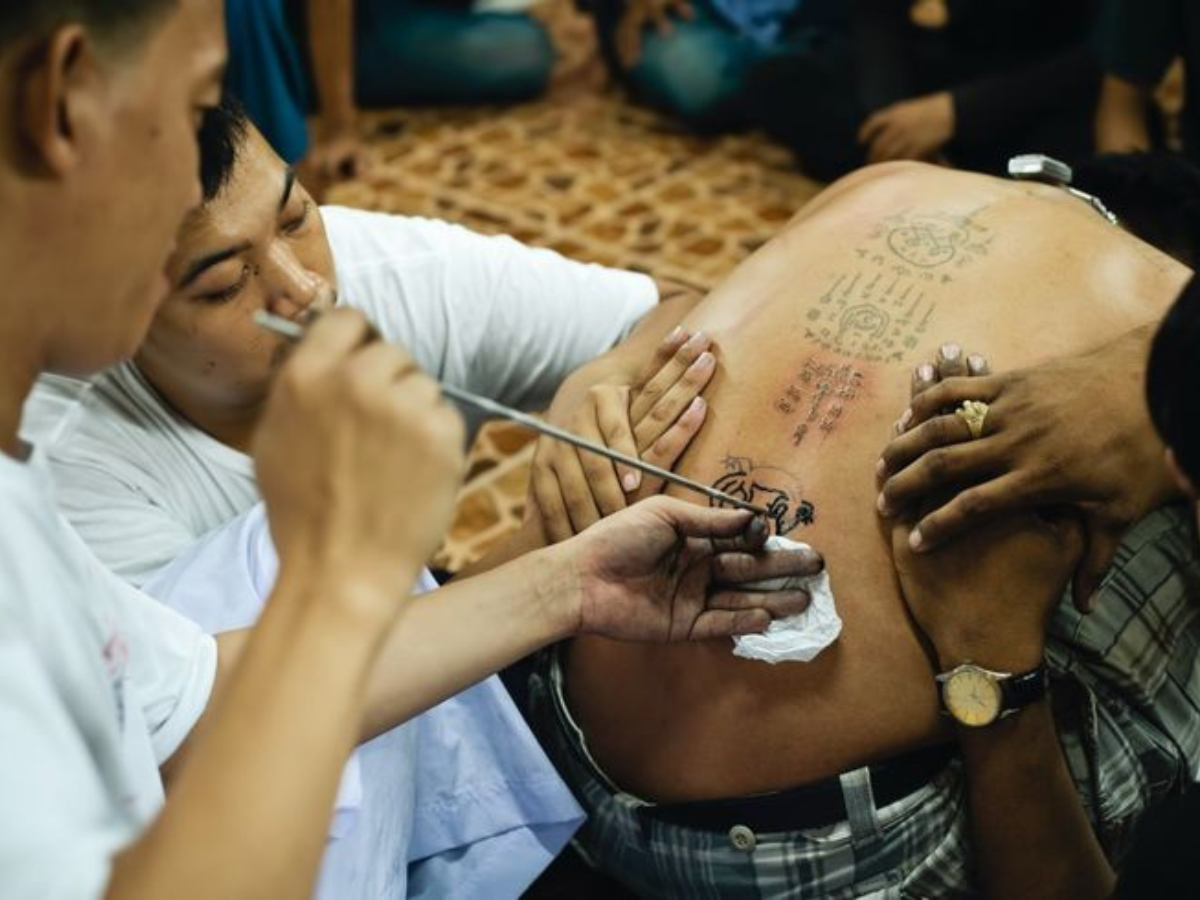
An increasing number of people are traveling to Southeast Asia for the experience of a Sak Yant tattoo: a monk-led ceremony where a blessing is performed before he wields a bamboo needle and chants prayers as he taps ink into your skin.
The phrase Sak Yant comes from the Khmer and Thai word sak (“to tap”) and the Sanskrit word yantra, meaning a sacred geometric diagram. This isn’t just tattoo as body art, it’s tattoo as prayer and magical talisman. The tradition dates back thousands of years, rooted in ancient Buddhist and Animist practices, and was used as spiritual armor during the Khmer Empire. Centuries later, this lineage continues across present-day Cambodia, Thailand, Laos, and Myanmar.
Sak Yant designs not only include yantras, but also depictions of animals such as tigers or elephants, deity figures, and inscriptions from ancient languages and scripts like Pali, Khom, or Lanna. And each Sak Yant gets charged with energy and intention, for example: protection from harm, courage in the face of danger, success in love, or good fortune in business…

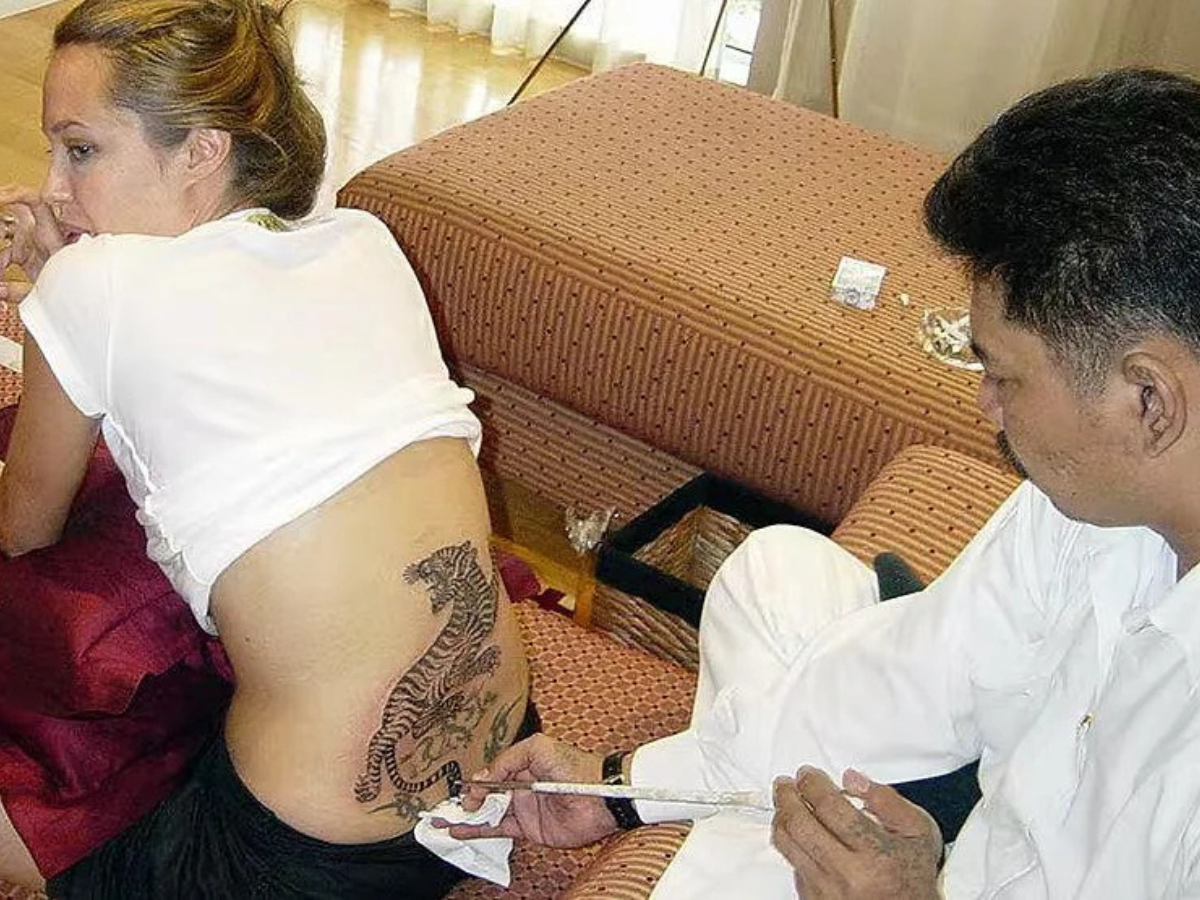
Is it ringing a bell? Angelina Jolie circa early 2000s, maybe? Anyway, here’s what you should know about the mystical Sak Yant tradition of Southeast Asia.
A breakdown of the Sak Yant tattoo ceremony
Getting a Sak Yant tattoo is a ceremonial experience that demands preparation, respect, and spiritual commitment. Some general guidelines include cutting out alcohol for three days beforehand and attending the ceremony in clothing that covers the shoulders and knees.
The ritual begins with offerings; flowers, incense, and candles, along with a monetary gift to honor the spirits and the Ajarn (master). After three bows, you can speak with the Ajarn about your challenges and intentions. You may choose your own design, or the Ajarn can suggest one based on your conversation.
The tattooing itself is meditation in action. Using traditional hand-poke methods with bamboo or metal needles, the master works in silence punctuated by the rhythmic chanting of prayers and mantras. Through the vibrational frequency of the words, the sacred chants activate the yantra and infuse the tattoo with intentional blessings.
Once the tattooing is complete, the Ajarn performs a blessing ceremony — breathing power directly into the fresh ink and outlining the rules of abstention (khatha kamma) now expected of you.
These begin with the five Buddhist precepts (no killing, stealing, lying, sexual misconduct, or intoxicants) but each lineage adds its own unique restrictions, sometimes including unusual dietary taboos like avoiding pumpkin or star fruit. It’s also believed that if the rules are broken, the Sak Yant’s power may fade.
For devotees, this is an ongoing relationship. Many attend the Wai Khru festival annually, where their Sak Yants are recharged through mantras and the bond between master and disciple is renewed. Some receive multiple Sak Yants over the years, building a comprehensive system of blessings tailored to life’s evolving challenges.
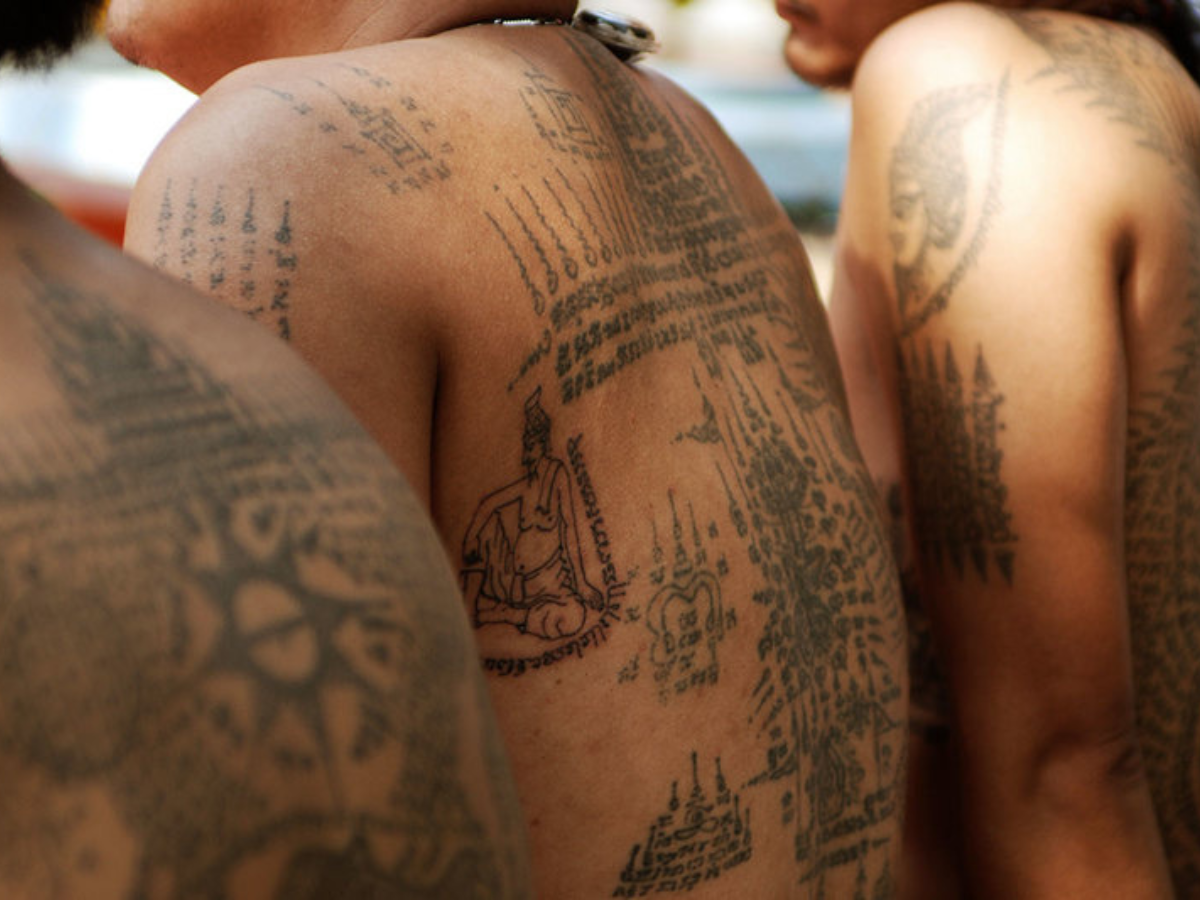
Sak Yant tattoos are more than a trend
While Sak Yant remained relatively unknown outside Southeast Asia for centuries, that changed dramatically in 2003 when Angelina Jolie showcased her five-line Sak Yant tattoo on her left shoulder blade.
Angelina Jolie’s tattoo sparked international fascination with the practice of Sak Yant, but if any of us have witnessed the impact of “influencer-ship” in today’s world, we know what comes next. It’s a familiar story: a sacred Eastern practice catches Western attention and suddenly it’s everywhere.
The popularization of Sak Yant has, of course, been a double-edged sword. On one hand, it brought attention and appreciation to an ancient spiritual tradition from the East. On the other, it fed a problematic pattern of commercialization and commodification that threatens the practice’s integrity.
Today, tourist hubs in the region are full of tattoo shops that reproduce the designs while stripping away the blessings, rituals, consultations, or spiritual foundations that make the Sak Yant experience authentic and meaningful. If you’re considering one, watch out for these “fast-food” versions that reproduce the aesthetic while abandoning the essence.
Approaching the Sak Yant tradition with respect
For the ones genuinely drawn to Sak Yant, the message from practitioners is clear: approach with sincerity or not at all. Do your research, seek out authentic Sak Yant masters who can explain the meanings and rules, and be prepared for a spiritual experience that extends far beyond the moment of tattooing. Remember, this is not a souvenir or a fashion statement — it’s a living connection to centuries of ancient Southeast Asian tradition.
The magic of Sak Yant isn’t in the ink or the design, but in the intention, the ritual, and your ongoing relationship with the sacred. In a world of mass-produced everything, these tattoos remind us to resist against a culture that wants to rush and simplify.
Sak Yants are prayers we carry on our skin and traditions we bear the responsibility to honor, most importantly when we come as outsiders looking in.
— Ghina Fahs
(All photo credit goes to respective owners, sourced from search engines)