




















































Cuju: The earliest recorded form of football
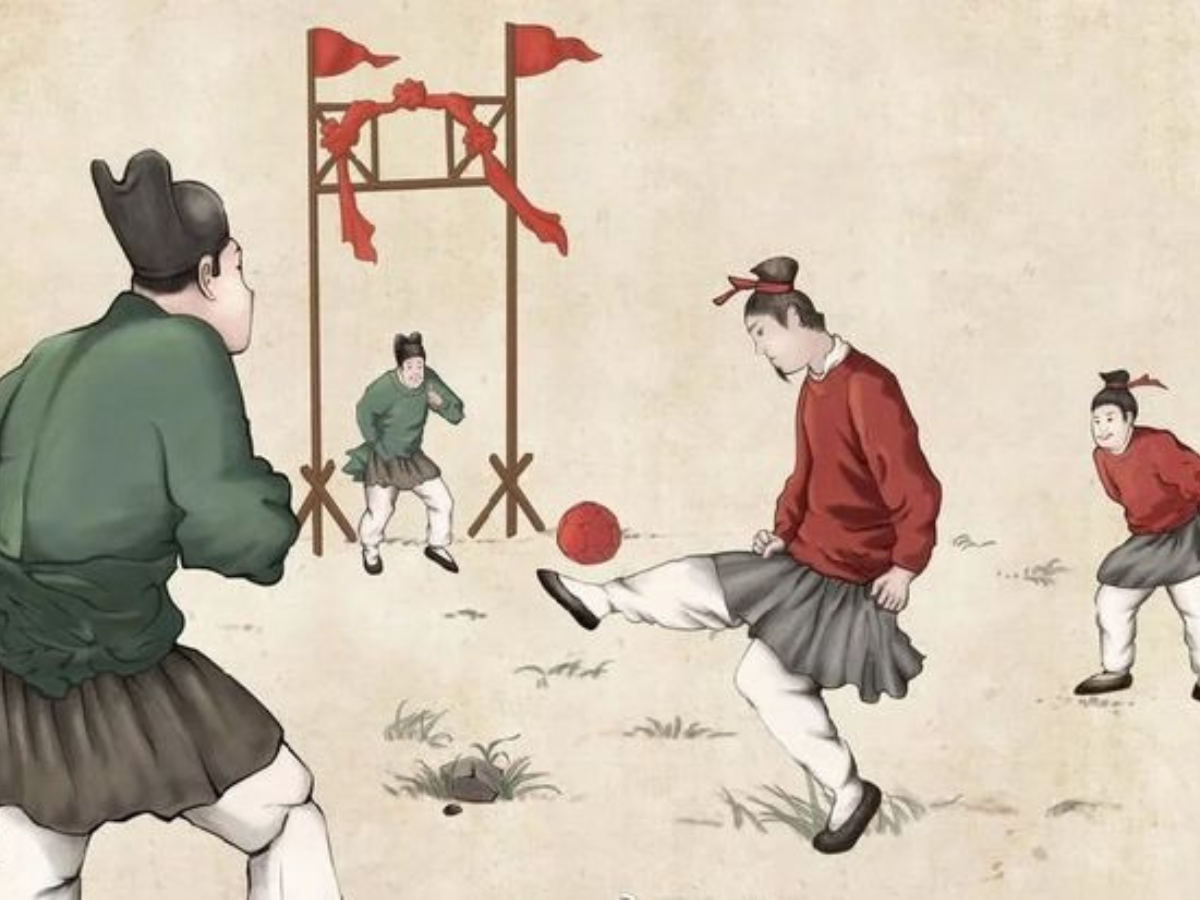
Is there anything that unites the world the way football does? Every four years, billions of people tune in to watch the World Cup, which some may say is just grown adults chasing a ball around a field, but there’s something undeniably special about it. How a seemingly simple sport has the power to shake up even the most emotionally reserved…
Have you ever wondered where the fascination with football actually began? Nope, not in a London gentlemen’s club in 1863, when the rules of association football were first written down — but over 2,000 years earlier, in ancient China.
That’s right, like tea, football did not originate in the UK, but in China instead. The game is called cuju (蹴鞠 — pronounced “tsoo-joo”), which means “kick-ball” or “kick the ball with the feet” and it’s the answer to the question of when and where humans first started kicking a ball for sport.
In fact, Fédération Internationale de Football Association (FIFA) itself officially recognizes China as football’s birthplace!
Training for the battlefield of life
Cuju’s origins aren’t exactly romantic. Rather than being a form of entertainment, it is said to have been invented for military training. The game emerged during the Warring States period, a chaotic era of continuous conflict between rival Chinese states, and soldiers used it to sharpen agility, coordination, and leg strength.
The FIFA Museum cites the poet Li You, who described cuju as a structured game with rules — but also adding that Li You’s poem reveals cuju as much more than just a form of entertainment or military exercise. It was also a lesson in balance and integrity off the field; a “metaphor for leading a good life”.
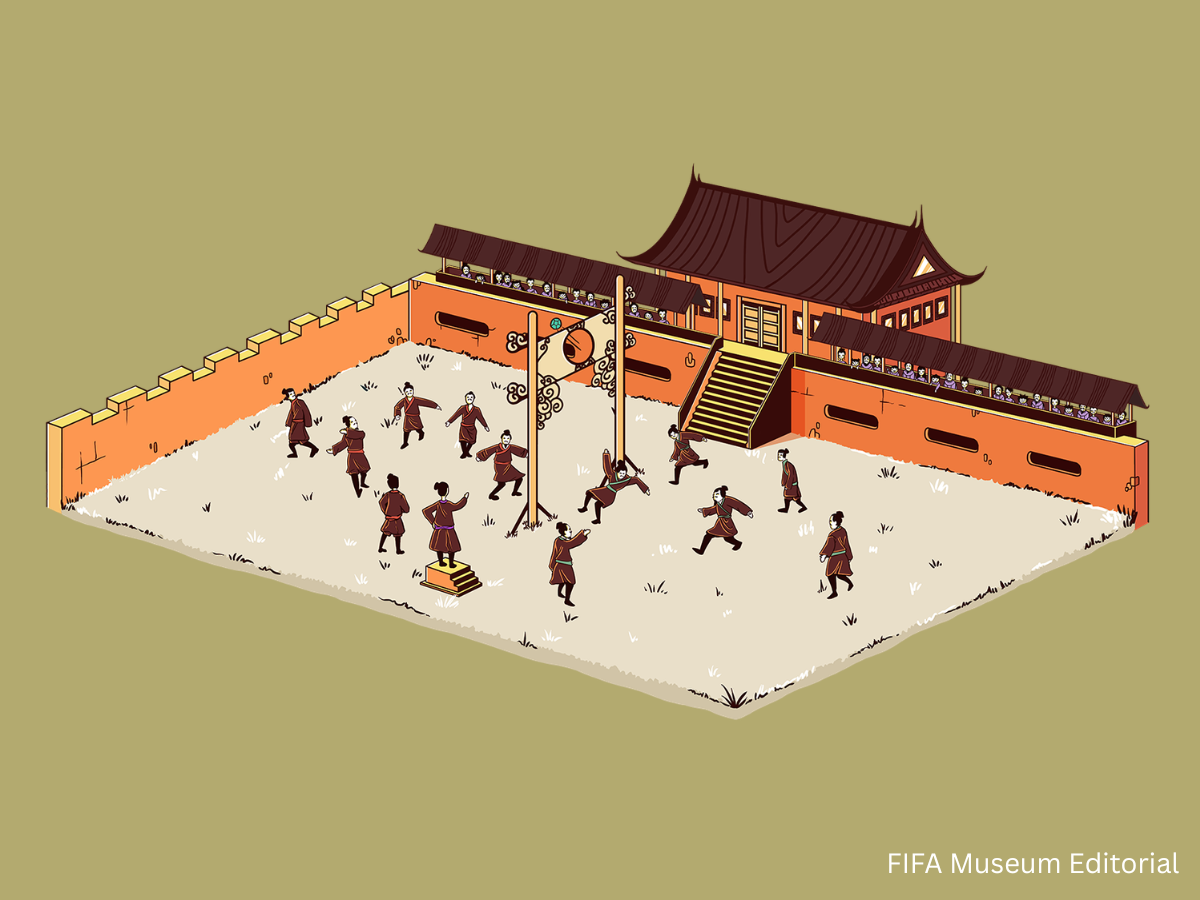
“A round ball and a square wall,
Just like the Yin and Yang.
Moon-shaped goals are opposite each other,
Each side has six in equal number.
…
Keep away from partiality.
Maintain fairness and peace
Don’t complain of other’s faults,
Such is the matter of cuju.
If all this is necessary for cuju.
How much more for the business of life”.
— Li You (translation from FIFA)
The evolution of cuju
What’s remarkable about cuju isn’t just its age, it’s also how far it traveled through culture and time while continuously evolving.
During the Song dynasty (960–1279 AD), cuju had transformed into something resembling a professional league. Dedicated clubs formed, stadiums were built, and the sport enjoyed a level of popularity that wouldn’t feel out of place today. Emperors sponsored matches and skilled players were revered for the strength of their footwork.
Naturally, cuju’s reach traveled beyond China and influenced neighboring cultures. In Japan for example, a more ceremonial variant known as kemari (蹴鞠 — pronounced “keh-mah-ree”) appeared around 1,400 years ago, which tells us that what we know as football today was spreading and evolving in the East for over a thousand years before it reached the West!
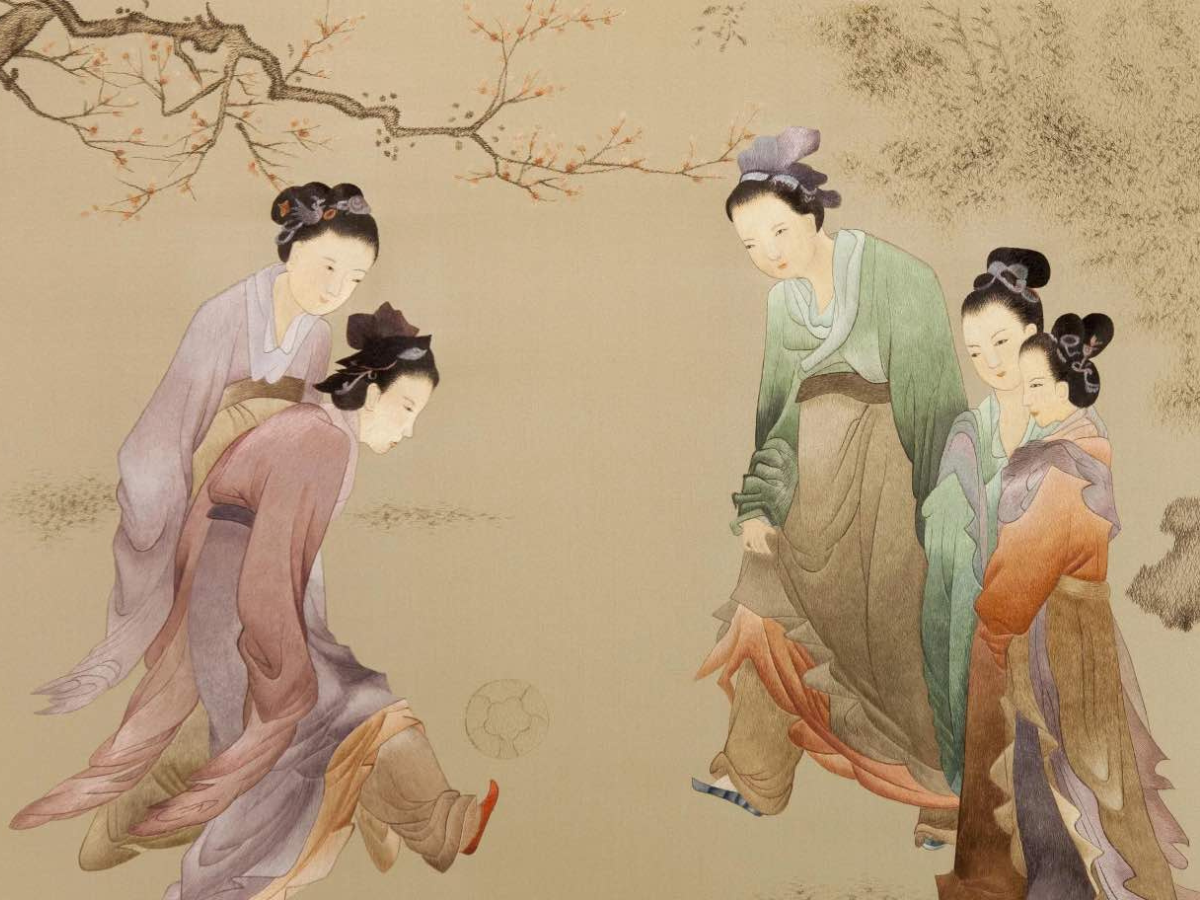
Baida and women in cuju
Records show that cuju wasn’t purely a male pastime. Women were also skilled cuju players, performing in a style known as baida (白打 — pronounced “bye-dah”) for the imperial court.
Unlike the competitive, structured, and goal-oriented cuju matches often played by men, baida was more skill-based and creative; primarily a performance of artistry, coordination, and fluid movement. Baida players juggled the ball using feet, knees, chest, back, shoulders, and head, demonstrating high kicks and graceful movements to musical accompaniment.
From cuju to football
Like most things, cuju’s fortunes shifted with politics. Over time, official support for the game faded and the hype died down. By the 17th century, cuju pretty much vanished for around 400 years — until 2004, when FIFA formally recognized cuju as the “direct ancestor of association football.”
Ironically, it was this very recognition that led to cuju’s revival: in 2015, the Linzi Football Museum opened in China’s Shandong province, and cuju is still played today in parts of China, sometimes even in schools and at traditional festivals.
Fast forward to today, we’ve come to know and love cuju’s descendant, the most watched sport in the world, as “the beautiful game.”
As we celebrate the magic of the 2026 World Cup, we remember the beautiful game’s oldest ancestor, cuju; “football before football.”
— Ghina Fahs
(None of the photos used are owned by us, photo credit goes to all respective owners)