
















































Decolonizing yoga, part 5: How yoga is a form of resistance (continued)
Welcome back to our Decolonizing Yoga blog series! In part 4, we explored how yoga — through asana, pranayama, and the yamas — can be practiced as a living form of resistance. In part 5, we’ll continue moving through the 8 limbs of yoga, particularly bahiranga (“external” limbs), focusing this time on the more subtle layers of niyamas and pratyahara, after which we will cover antaranga (“internal” limbs) in part 6.
If Part 4 asked how we show up in our bodies and in the world, part 5 asks: how conscious are we in our own company, and how do we resist oppressive forces from the inside out?
Something some of us don’t always realize early on our journey of decolonization is that systems of control don’t only work from the outside in. Sometimes, they make their way into our minds. They can shape how we speak to ourselves, whether we believe we deserve rest, or whether we trust our own perception. Oppression reaches completion not when it controls our bodies, but when it colonizes our inner world — when we do the work of the oppressor unto ourselves.
Yoga is a beautiful tool that has been passed down generation after generation to help us dismantle these very programs.
Beyond asana, pranayama, and the yamas
Where the yamas we discussed in part 4 are more social, offering guiding ethical principles for interacting with the world, the niyamas are more personal, offering guiding principles for your relationship with yourself. They are practices of self-cultivation — not in the self-improvement, productivity-optimization sense that capitalism loves, but in the sense of tending to your inner life as sacred ground.
The thing is, we’re much harder to sway and control when we know ourselves, when we’re anchored in self-awareness, when we learn how to self-regulate, and when we’ve established an inner center that we know how to return to.
More so, how can we show up for our community and remain steadfast in the face of our collective pain, when we’re lost, disoriented, or depleted?
The 5 niyamas (personal observances):
- Saucha (cleanliness/purity): This isn’t just about physical cleanliness, although that’s important. Saucha encourages us to pay better attention to what we’re letting into and/or hoarding in our minds, our bodies, and our spaces. In a media landscape engineered to flood us with fear and compulsive consumption, saucha is the practice of discernment. It asks: does this nourish me or deplete me? What needs clearing — not just from my physical space, but from my inner narrative?
- Santosha (contentment): In a system that feeds on endless material desire — the engine that keeps consumerism running — santosha is an act of defiance in that it shifts us away from the lack or scarcity mindset and reminds us to locate a place of sufficiency, contentment, and enoughness within ourselves that the external deceptions and illusions of capitalism can’t reach.
- Tapas (disciplined effort/burning away): Tapas refers to our inner fire and self-discipline. It’s the practice of releasing instant gratification and sitting with challenge or discomfort for the sake of growth. Tapas is the heat that helps us burn through conditioned patterns and self-limiting beliefs such as internalized shame, self-sabotaging behavior, pessimism or fear-based narratives, and the self-doubt planted by systems that benefit from our smallness.
- Svadhyaya (self-study): Colonial systems survive in part because they have told us who we are, and we believed them. Svadhyaya is the practice of not only self-awareness but also self-study; as in, turning toward oneself as a subject worthy of inquiry. This means studying our thoughts, reactions, patterns, inherited beliefs and asking: which of these stories about myself did I choose, and which were chosen for me? What limits me, and what brings me closer to my true self?
- Ishvara Pranidhana (surrender to something greater): Rather than being about submission to authority or defeat, ishvara pranidhana is about faith, remembering we can’t control everything, and releasing the illusion that the individual ego — exhausted, overwhelmed, and finite — must carry everything alone. For many navigating collective trauma and systemic injustice, this surrender is medicine: a sense of trust in something larger than the self that may not always be visible to the eye, whether that’s our community, our lineage and ancestry, the earth, or the mystery of existence itself.
Pratyahara: The bridge
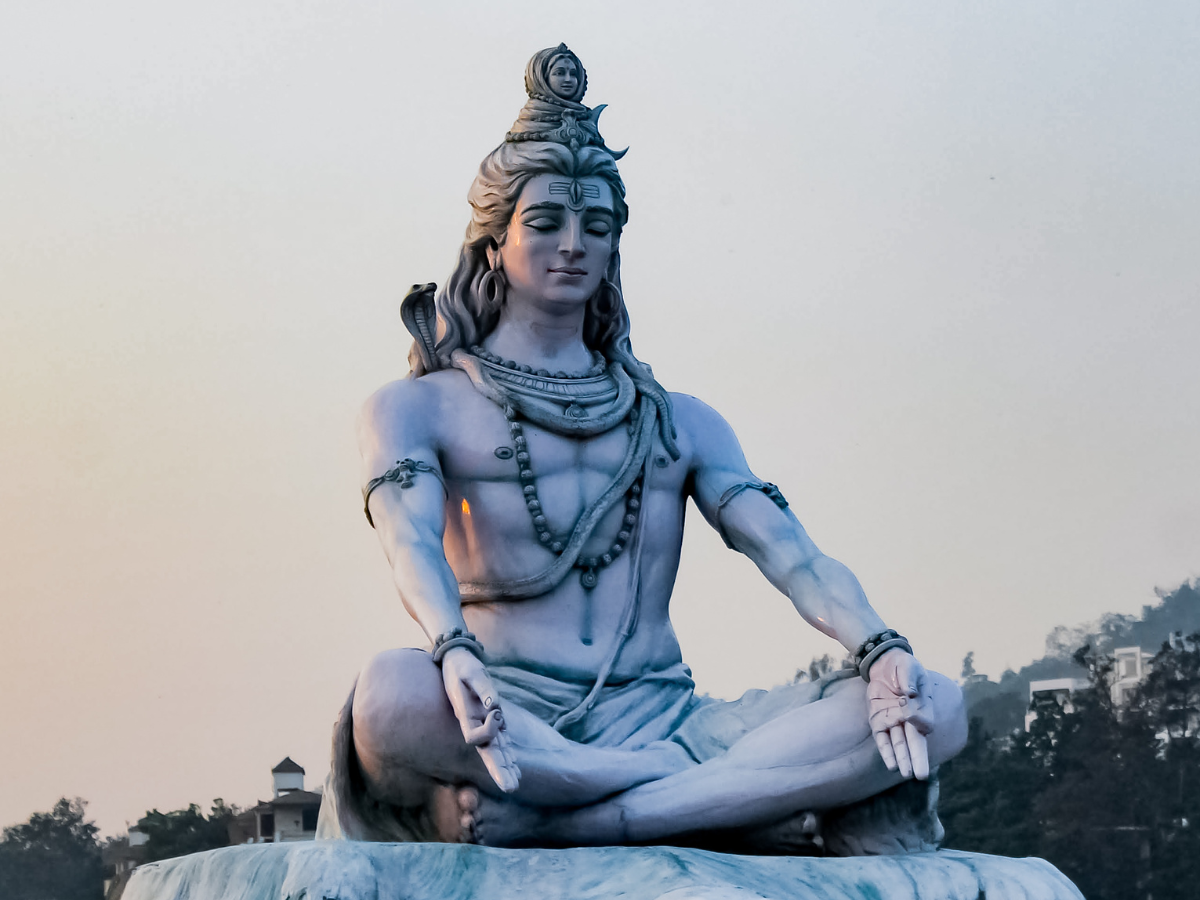
Pratyahara is the practice of intentionally withdrawing the senses, shifting our attention away from external stimulation to listen to what lives beneath it. While pratyahara is considered an “internal” limb, it can be seen as the bridge between yoga’s 4 “external” limbs; asana, pranayama, yama, niyama, and the more meditative states of the 4 “internal” limbs; pratyahara, dharana, dhyana, samadhi (more on that in part 6).
We live in an era of unprecedented sensory and informational overload. Our attention has literally become a commodity, and “big tech” companies are jumping through hoops to capture it. Pratyahara is a form of resistance because it’s the practice of opting out — not permanently, not naively, but long enough to get underneath the noise and reclaim your own inner wisdom.
The practice of pratyahara is not an escape from reality. Pratyahara helps us create the conditions in which our perception of reality can be rooted in truth, and therefore trusted. Because a mind that’s never been quiet can’t easily distinguish between its own voice and the voices and programs it may have absorbed from culture, media, politics, propaganda, conditioning, trauma, and so on.
In this way, going inward is not just a retreat — it is reconnaissance.
Yoga is resistance
The deeper we move through the 8 limbs, the clearer it becomes: yoga has always been a technology of liberation. Not the kind of yoga we see on Instagram or offered at a $40 drop-in class, but the kind that quietly and persistently, returns a person to themselves, to the state of yoga — whole, unified, and free.
To be in the state of yoga is, in itself, an act of resistance. Don’t you think?
Keep an eye out for part 6 of our Decolonizing Yoga blog series, where we’ll look at the final internal limbs of yoga.
— Ghina Fahs
(We do not own any of the photos used, all photo credit goes to respective owners, sourced from search engines)