







Dabke (dabkeh): the dance of the Levant
“When we’re connected to the root of a dance, we understand the dance more, we understand the weight, the energy. And dance is always born out of something bigger than us… Take the Brazilian samba for example, this dance originated among enslaved Africans brought to Brazil by the Portuguese. The oppressed were chained at their feet, and yet despite all the despair, they tried to find moments of joy, of dance, of revolution. The oppressor benefits when the oppressed are in a state of sadness and desperation, but the best tool that the oppressed can use to resist, is to dance and celebrate.
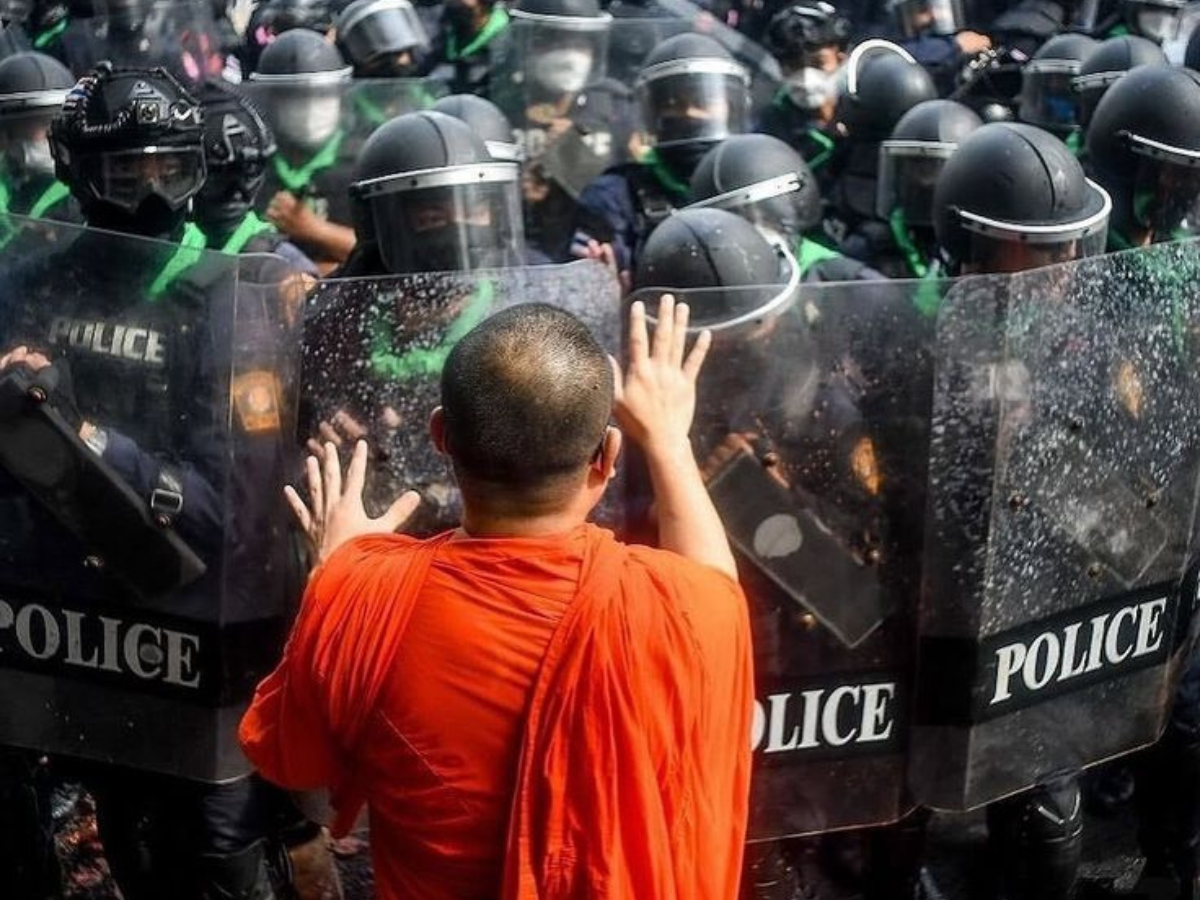
To this day, we’re still seeing dance as a tool of resistance, for example, Palestinians stomping their feet and dancing dabkeh in front of Israeli tanks. The dabkeh is not only a dance infused with joy, celebration, and cultural pride, but it became a symbol that says ‘you can take my land, you can take my house, but you shall not take my heritage, my dance, my stomp. In my stomp, I am saying: this is my country, these are my roots, this is my identity, even if I’m no longer physically on my land.’ When we understand these origins, the dance gets a new layer, it gets depth, it gets life.”
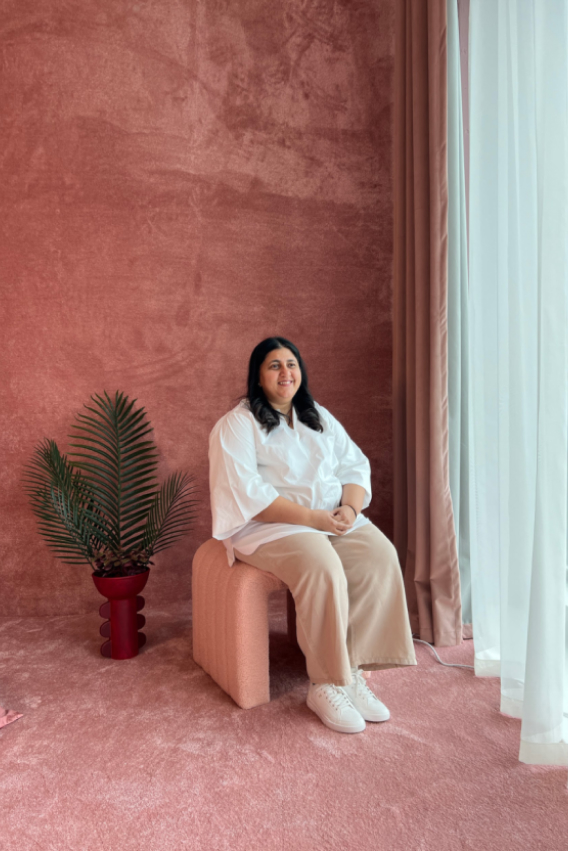
– Sarah Safi Harb, founder of ‘The Dance Movement’
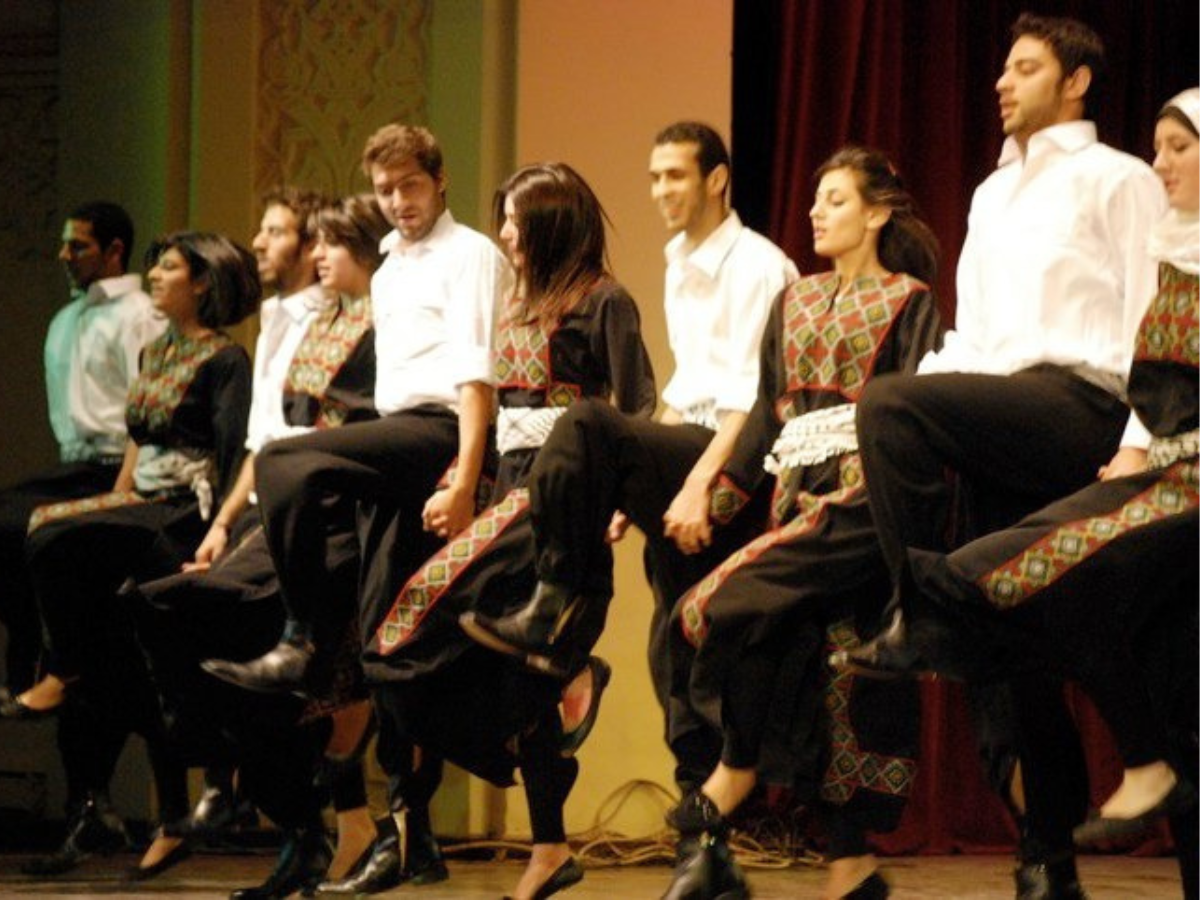
The origin story of dabkeh
The line dance known as dabkeh (loosely translating as “to stomp the feet”) came to life somewhere in the mountains of what is now Lebanon, Syria, Jordan, or Palestine — before the borders that separated the Levant were pencilled in by men in suits who had never once stepped foot there.
Folk legend says that the Levantine people built the roofs of their houses with straw and mud. When weather changes and heavy rain or snowfall posed a serious threat to the stability of their infrastructure, family members and community would gather together, line up on top of their houses and stomp in unison. This helped keep the rooftops intact and it helped the villagers get warmed up in the cold.
Since the stomping only worked when everyone moved together in sync, the activity naturally demanded cooperation and rhythm. What began as community labor and practical necessity gradually transformed almost accidentally into one of the most vibrant and cherished traditions in Levantine culture. One that remains embodied and expressed to this day, at weddings, festivals, celebrations, and more.
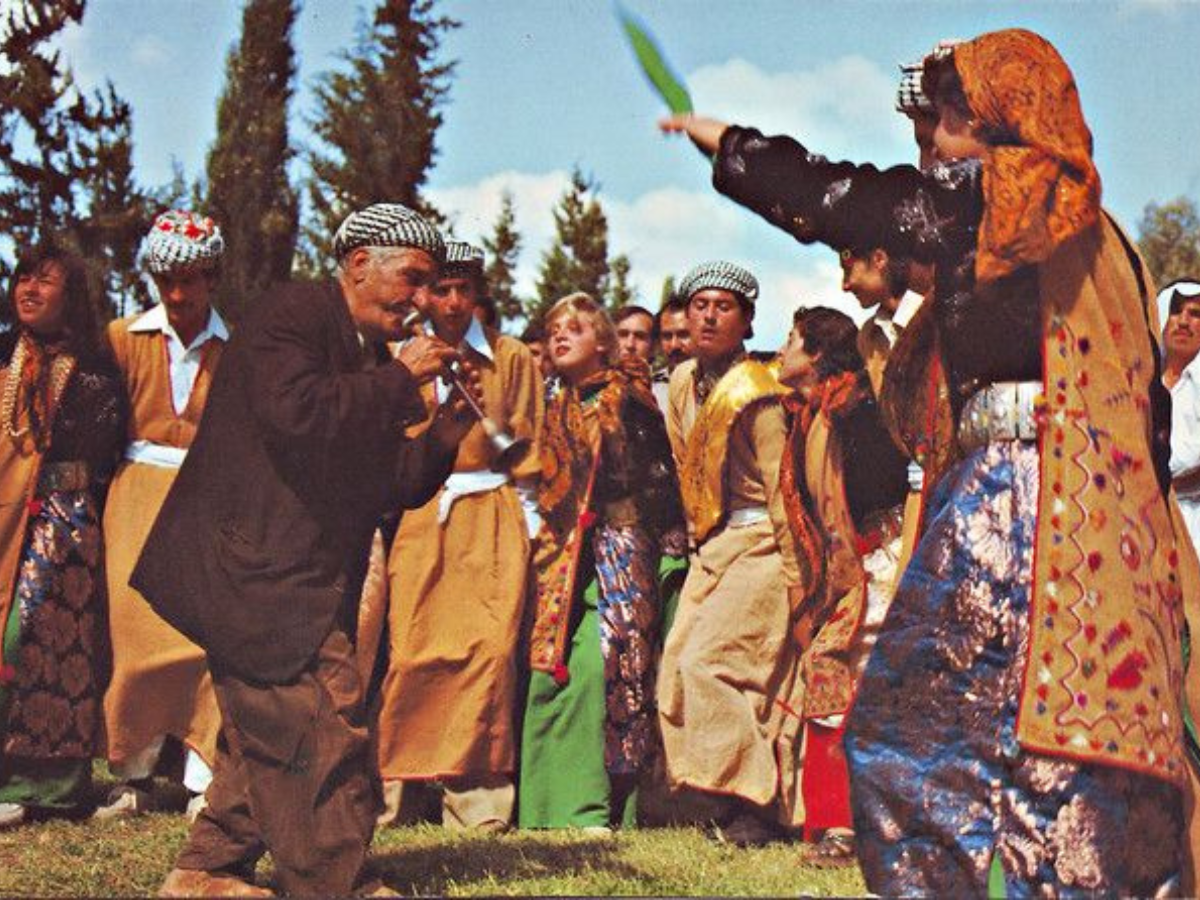
While there are numerous styles of dabkeh that vary significantly by region, the most common one is deceptively simple in form. A line or open circle of dancers, arms linked or hands clasped, led by a lawwih — the leader who spins and improvises exaggerated movements — while the rest follow in synchronized footwork.
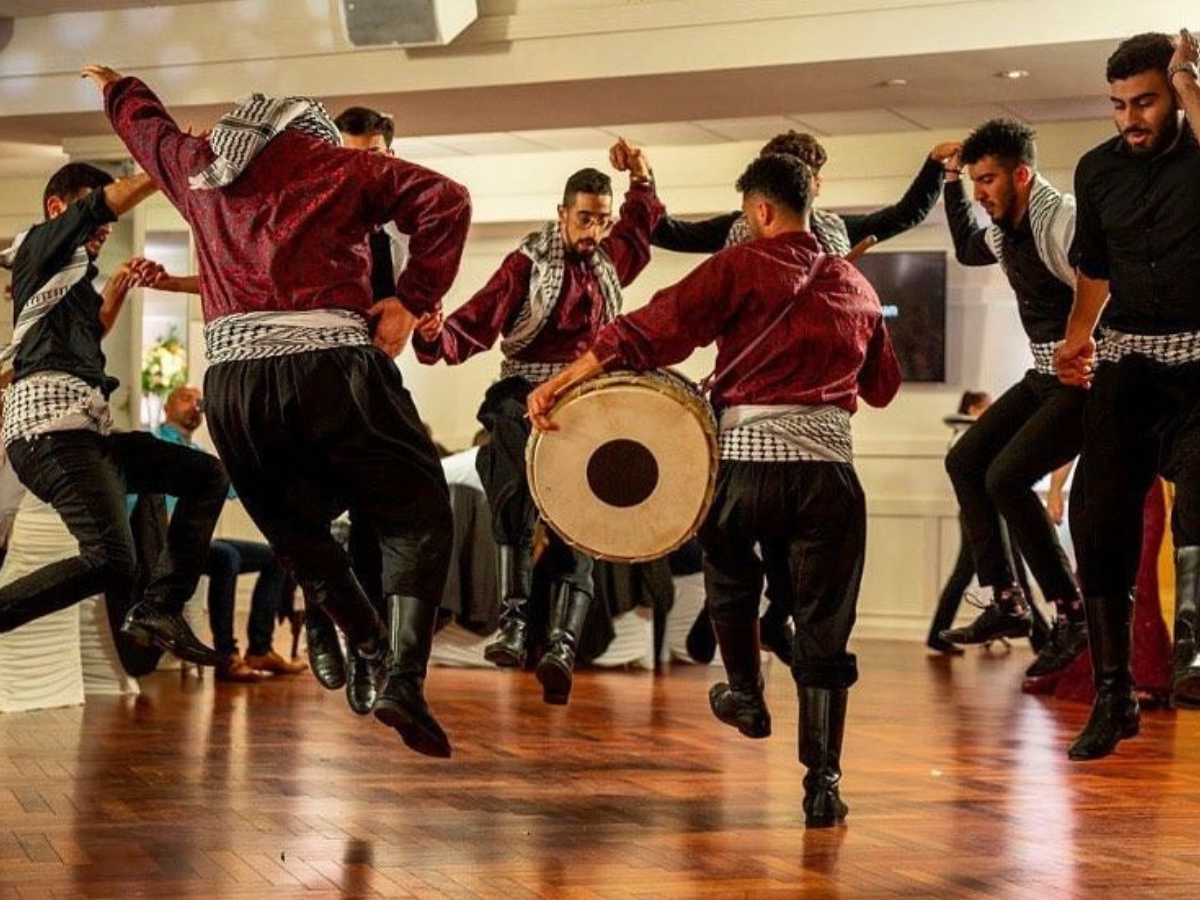
Dabkeh: Resistance through movement
Here’s when the dance becomes political. We continue to see dabkeh being danced most urgently by people who get told over and over that they do not exist. Palestinian dabkeh troupes have performed in refugee camps, community centers in Chicago and Berlin and Beirut, and at protests and vigils across the globe. In this way, dancing the dabkeh in community isn’t just nostalgia; it’s argument, affirmation, and resistance.
“A paralanguage of sorts, artists have always found ways to use their bodies to connect them to their surroundings and challenge the injustices of their time… Dabkeh will continue to create and uphold a community in a way that only art can. Every stamp of their feet is an act of cultural retention.” Writes Christina Atik in Dabke: Resistance through movement.
After 1948, as Palestinian villages were depopulated and erased, cultural practices like the dabkeh became crucial vessels for collective memory and confronting cultural suppression. El-Funoun, a popular Palestinian arts troupe founded in 1979 in the West Bank, developed dabkeh into an explicit form of cultural resistance, keeping alive both the art form and the names of towns and landscapes that younger generations may never have seen. When El-Funoun performs, they sometimes announce each dance by the name of the village it came from. Many of those villages no longer stand.
Dabkeh as a uniting force
If there’s one thing besides delicious, mouthwatering mezze that unites the Levant and the greater Arab region, it’s Dabkeh. While some presume dabkeh is purely Lebanese or solely Palestinian, dabkeh and its politics don’t belong to one people alone. It’s a genuinely pan-Levantine tradition. Syrians, Lebanese, Jordanians, Iraqis, and other Arab communities all practice it and all claim it. It’s one of those rare cultural forms that predates the nation-state and stubbornly refuses to be entirely claimed by any one of them.
What remains, stripped of its political layers, is something full of radical joy and genuine community. Dabkeh is not exactly something you do alone, it’s a dance that requires other people. It was designed for the collective, born from collective labor, and survives through collective memory. It is, in its own way, a collaborative and collective embodiment of liberation.
— Ghina Fahs
(We do not own any of the photos used, all photo credit goes to respective owners, sourced from search engines)