



























The audacious poet: Hafiz (Hafez) of medieval Persia
“Start seeing everything as God
But keep it a secret”
— Hafiz (Translated by Daniel Ladinsky)
After journeying with Nizar Qabbani of Syria and Lao Tzu of China, it is now time to take you on a little trip to medieval Persia, in the rose gardens and taverns of Shiraz — home to a poet who many (including myself) regard as one of the greatest of all time: Hafiz, AKA Hafez.
As a poet myself, Hafiz is one of my greatest inspirations and his poetic style has undoubtedly influenced my own. Like Rumi, the words of Hafiz often feel like medicine for the reader’s heart, because they were written down by someone who, through devoted spiritual practice and loving intention, became an open channel for divine expression to flow through.
Let me explain what I mean by that…
Who was Hafiz?
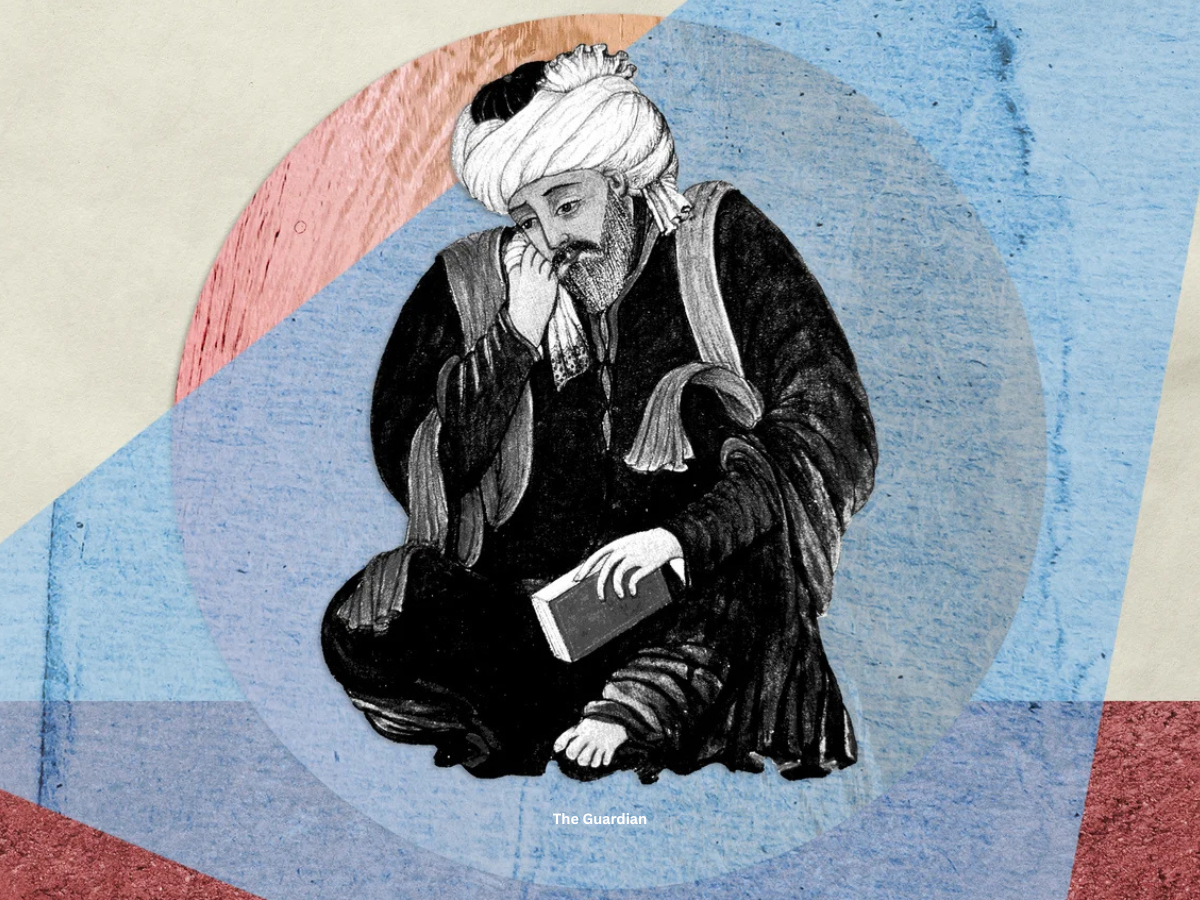
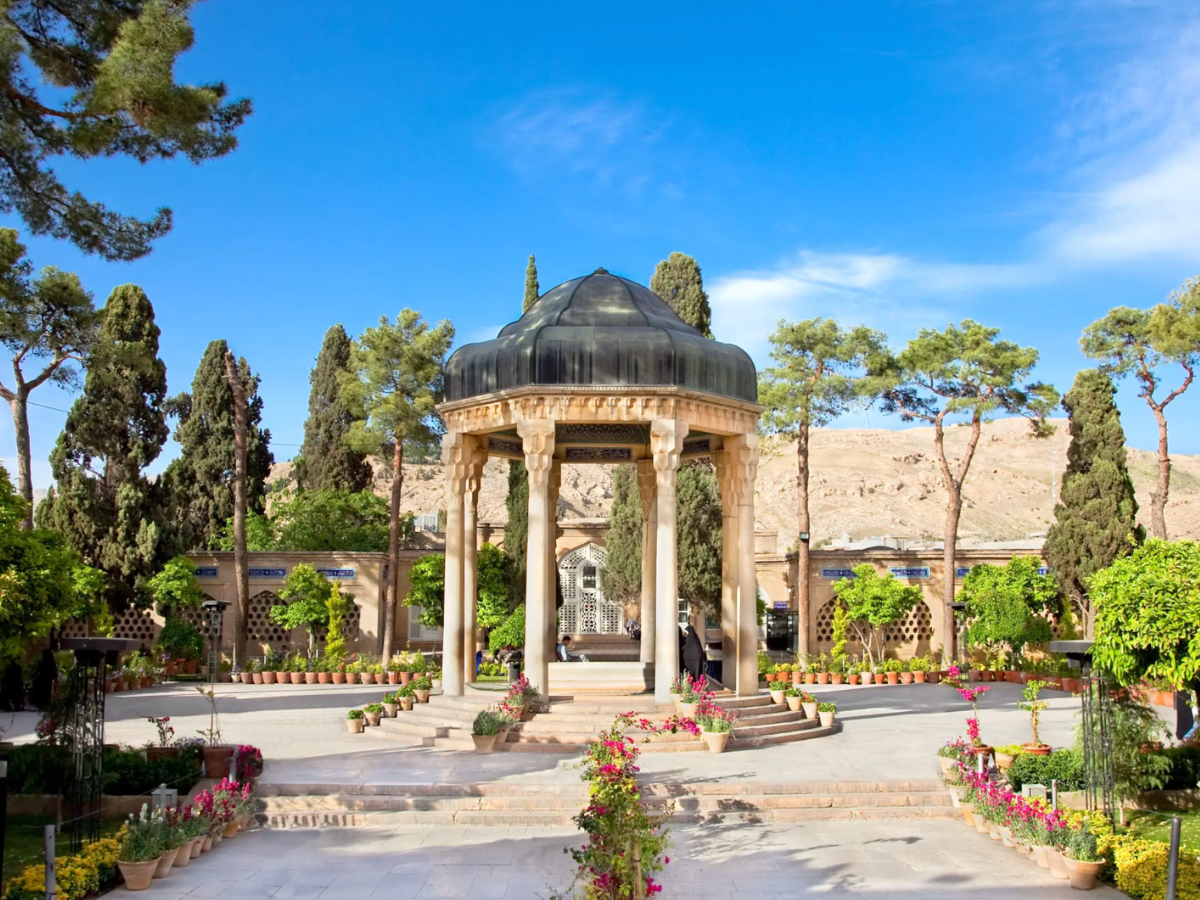
Khwaja Shams-ud-Din Muhammad Hafez-e Shirazi was born in Shiraz (located in modern-day Iran) sometime in the early-to-mid 1300s and lived there until his death around 1390. His pen name, Hafiz, translates to “one who has memorized” but also means “guardian” or “protector” and is a title that’s given to those who memorize the entire Quran. After his father’s death, Hafiz left school to work at a bakery and as a copyist, before eventually finding a home as a court poet and religious teacher.
The most prominent work he left behind was The Divan of Hafez, a collection of roughly 500 “ghazals” — a demanding, tightly rhymed Persian verse form that, before Hafiz, was used mostly for songs about wine and pleasure. Hafiz took that same language and gave it more layers, using it to point toward the divine that lives both within him and in everything around him.
“When no one is looking
I swallow deserts and clouds
And chew on mountains knowing
They are sweet bones
When no one is looking and I want to kiss
God
I just lift my own hand to
my mouth.”
— Hafiz (Translated by Daniel Ladinsky)
Hafiz and the Sufi tradition
Even though Hafiz’s poems are deeply spiritual and devotional, they’re also sometimes soaked in the imagery of wine, taverns, or the beloved’s face: language that may sound merely sensual on the surface. But Hafiz was writing within the Sufi tradition, which is the more mystical branch of Islam, centered on the soul’s pursuit of union with the divine — that is, connecting with God through direct personal experience.
What this means is that his writings demonstrate that the divine can be found within everything (yes, including the taverns) and that all of this life is a sacred metaphor. For example, “drunkenness” becomes a metaphor for spiritual ecstasy, “the tavern” becomes a place of unguarded honesty, and “the beloved” can be read simultaneously as a lover, a mentor, himself, or God.
Hafiz knew his soul was multidimensional and as a result, his creations were too. What can sometimes feel ambiguous in his writing is there by design, and resists being reduced to a single interpretation. A single line of his poetry can be read as romance, as spiritual longing, or as social commentary all at once.
With that, Hafiz earned himself a title I personally love: Shayar-e-Gustaakh, which means “the audacious poet” — not only because his language was seen as bold and impious among conservatives, but also because he wasn’t afraid to call out religious hypocrisy and criticize oppressive systems through his work.
A timeless icon in the world of poetry
To this day, many Persian households keep a copy of the Divan alongside the Quran, and practice “fal-e-Hafez”: opening the book at random and reading whatever verse appears as guidance or oracle, a tradition especially common during Nowruz and Yalda Night celebrations.
Hafiz’s reach has also extended far beyond the region, of course, and many have dedicated their careers to translating his works and making them accessible to us all.
I believe Hafiz’s poetry is so profound because it gently reminds us that the divine is felt, rather than known — and he shows us that the sacred and the sensual, the spiritual and the earthly, are not as separate as we are made to believe. Hafiz refused to box himself because he knew he was inherently and infinitely divine, and with that, he built some of the most enduring poetry in human history.
“I wish I could show you,
When you are lonely or in darkness,
The astonishing light
Of your own Being!”
— Hafiz (Translated by Daniel Ladinsky)
— Ghina F.
(We do not own any of the photos used, all photo credit goes to respective owners)