








































Lao Tzu of China and the Tao Te Ching
“Nature does not hurry, and yet everything is accomplished.”
— Lao Tzu (paraphrased)
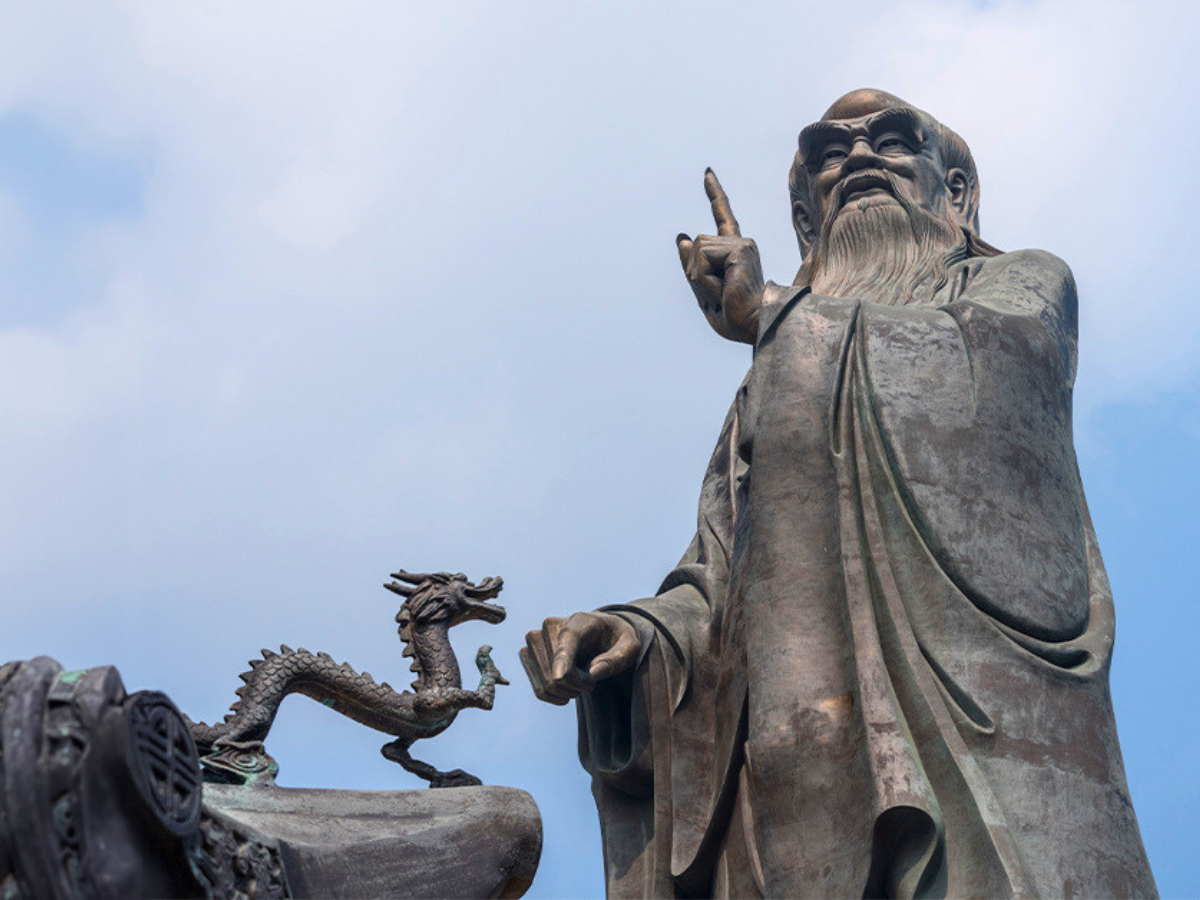
After exploring Syria’s Nizar Qabbani in part 4, part 5 of our Poetry Pot blog series travels further East, and further back in time, to one of the most impactful voices in human history. Today’s post honors Lao Tzu (AKA Laozi or the father of Taoism), the ancient Chinese philosopher and poet credited with writing the Tao Te Ching, the second most translated book in the world after the Bible.
The fascinating mystery about Lao Tzu is that whether or not he actually existed is debated by modern scholars — some believe he was a real person, some others speculate that the name Laozi (meaning “Old Master”) merely represents various authors who are believed to have contributed to the Tao Te Ching. And yet regardless, the elusive Lao Tzu’s words have outlasted almost every philosopher, poet, or ruler we can name with certainty.
Whether the man himself was real, mythologized, or a representative of many thinkers, what Lao Tzu left behind was not just beautiful poetry, but philosophy that knows no time or space.
The legend of Lao Tzu
Stories say Lao Tzu lived in China sometime around the 6th century BCE, working as an archivist under the Zhou dynasty. Here’s the most famous story about him:
In his later years, Lao Tzu became disillusioned with the political corruption, moral decay, and decline of civilization around him, so he decided to leave the society he was a part of — heading West on the back of a water buffalo. As he was leaving, a border guard recognized the wise philosopher and asked him to write down his wisdom before he vanished. So he sat down and wrote eighty-one short verses. Then he left, and was never seen again.
These are the verses that make up the Tao Te Ching.
Now, whether the story is literally true or not doesn’t matter much. Either way, it captures something essential about the philosophy itself: that the highest act of wisdom is in letting go.
Why Lao Tzu was ahead of his time
The Tao Te Ching — roughly translated as The Book of the Way and Its Virtue — is not an easy book to describe, partly because Lao Tzu himself warns you upfront that anything you can describe isn’t really it. The Tao can only be lived:
“The Tao that can be told is not the eternal Tao.”
— Lao Tzu, Tao Te Ching, Chapter 1
It was written at a time when Chinese philosophical thought was dominated by hierarchy, ritual, and the obligations of social order. Lao Tzu challenged this system by suggesting that the greatest power was not in force, but in yielding — that true leadership succeeds not through arrogance but through gentleness.
“A leader is best
When people barely know he exists
Of a good leader, who talks little,
When his work is done, his aim fulfilled,
They will say, “We did this ourselves.”
― Lao Tzu, Tao Te Ching, Chapter 17
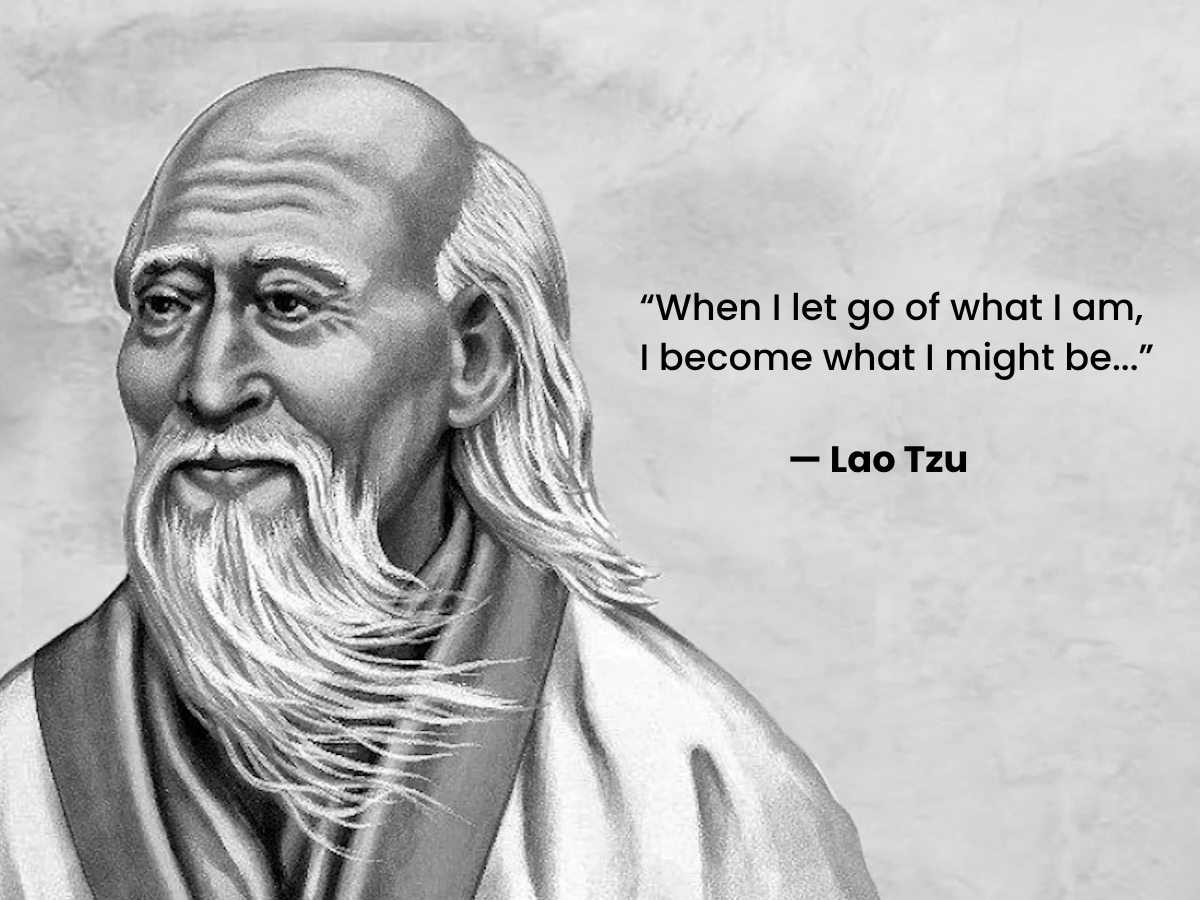
In a world obsessed with doing, Lao Tzu championed wu wei, which translates to non-action, or effortless action. As opposed to passivity, wu wei is a kind of deep attunement to the natural flow of life — to trust in what is unfolding enough to release our grip on it.
The Tao Te Ching is a book full of paradoxes that weren’t just poetic, they were a direct challenge to the dominant thinking of the era… With that, the question begs to be asked; just how much has the world really changed over the last 2,500+ years?
How Lao Tzu stood out as a writer and philosopher
In many ways, Lao Tzu’s unconventionality was revolutionary. In a time where other Chinese philosophical texts of the period were dense with argument and structured debate, the Tao Te Ching felt like a song of poetry and paradox. Its verses are short, some only a few lines, and they resist easy interpretation. Simplicity, openness, and deliberate choice of depth over complexity are part of its genius.
“Knowing others is intelligence;
knowing yourself is true wisdom.
Mastering others is strength;
mastering yourself is true power.”
— Lao Tzu, Tao Te Ching, Chapter 33
What makes Lao Tzu so resonant to this day, is that his philosophy holds opposites together without forcing them to resolve. The Tao Te Ching doesn’t offer answers as much as it teaches a different way of seeking them.
Poetry that never dies
The eighty-one verses of the Tao Te Ching have been rendered into English alone more than 250 times, because the original Classical Chinese is so compressed that a single character can hold multiple meanings at once.
Scientists, artists, martial artists, therapists, executives, and monks have all found something different and impactful inside the Tao Te Ching. It’s almost as if the text demands to be open and timeless; revisited, re-read, and reinterpreted. It keeps offering itself back, as poetry that never dies.
At around 5,000 characters, the Tao Te Ching may be short enough to read in a single sitting, but it offers enough wisdom to spend a lifetime returning to.
See you at the next Poetry Pot!
— Ghina Fahs
(We do not own any of the photos used, all photo credit goes to respective owners, sourced from search engines)