













































Everything you need to know about scuba diving in the Gulf of Thailand
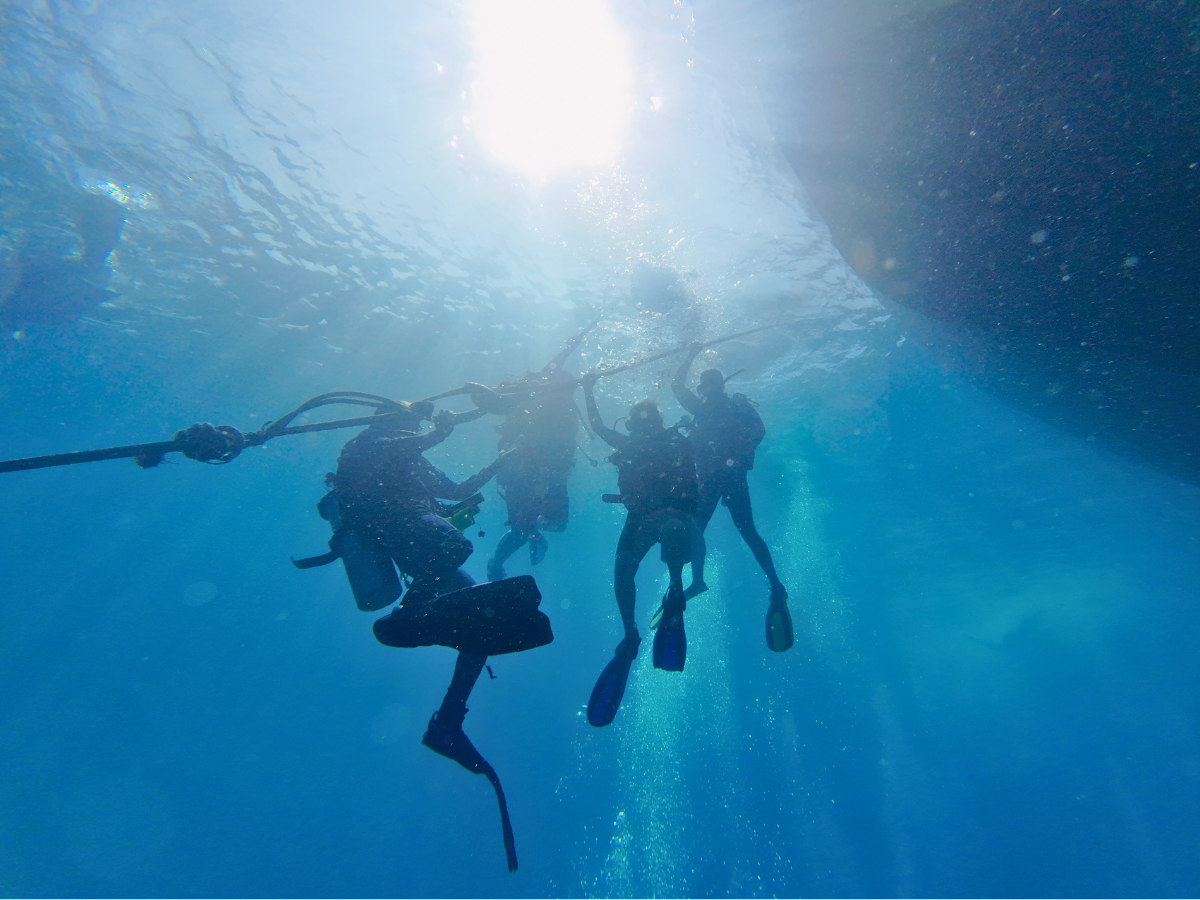
We’re all geared up, ready to jump in. My diving instructor gives the signal, I press one hand over my mask and the other over my weight belt, and the sea swallows me whole. Bubbles, silence, sunlight fracturing through the water above me. I’d been both dreaming about and dreading this moment for the past two weeks.
As someone who’s been in love with the sea for as long as I can remember, it’s no surprise that scuba diving has waited patiently at the top of my bucket list for years. And so here I was, in Koh Tao, Thailand with two intentions: write a lot, and learn how to scuba dive. I gave myself one month on the island and waited around two weeks before I finally booked an Open Water Scuba Diving course. In that time, I watched all kinds of fears and anxieties creep into my system.
What if I panic at 18 meters deep and swim up too fast? What if I swallow water and choke? What if I lose consciousness and drown? What if I get attacked by some mysterious sea creature? What if my eardrums explode? What if I simply forget how to breathe?
The mind really is a fascinating story-maker. I was taken aback by how anxious I became, because none of this ever crossed my mind when I pasted pictures of scuba divers on my vision board two years ago — the fear only showed up once the thing I wanted was actually within reach.
Don’t let that put you off, though. It’s experiences like this one that keep reminding me not to let fear run my life. So I went ahead and completed my Open Water Scuba Diving Certification, and I’m so glad I did.
If you’re curious about diving and want to give it a try in Thailand, here’s what you can expect.
Choosing the Basic Diver trial or Open Water certification
Before committing to the full 3-day Open Water course, you have the option to try it out first. The “Basic Diver,” or “Try Scuba,” is a 1-day introductory program covering basic theory, essential skills, and an ocean dive up to 12 meters deep with a professional guide. It’s essentially identical to day one of the full 3-day course.
If you decide to continue on and complete the Open Water course (PADI or SSI), you become officially certified to dive anywhere in the world (with a certified buddy or guide) to depths of up to 18 meters. There are further courses available too, if you want to deepen your knowledge and go beyond that. The good news is you don’t need any prior experience to get certified, and you don’t even need to be a great swimmer — just comfortable enough to float and move through the water.
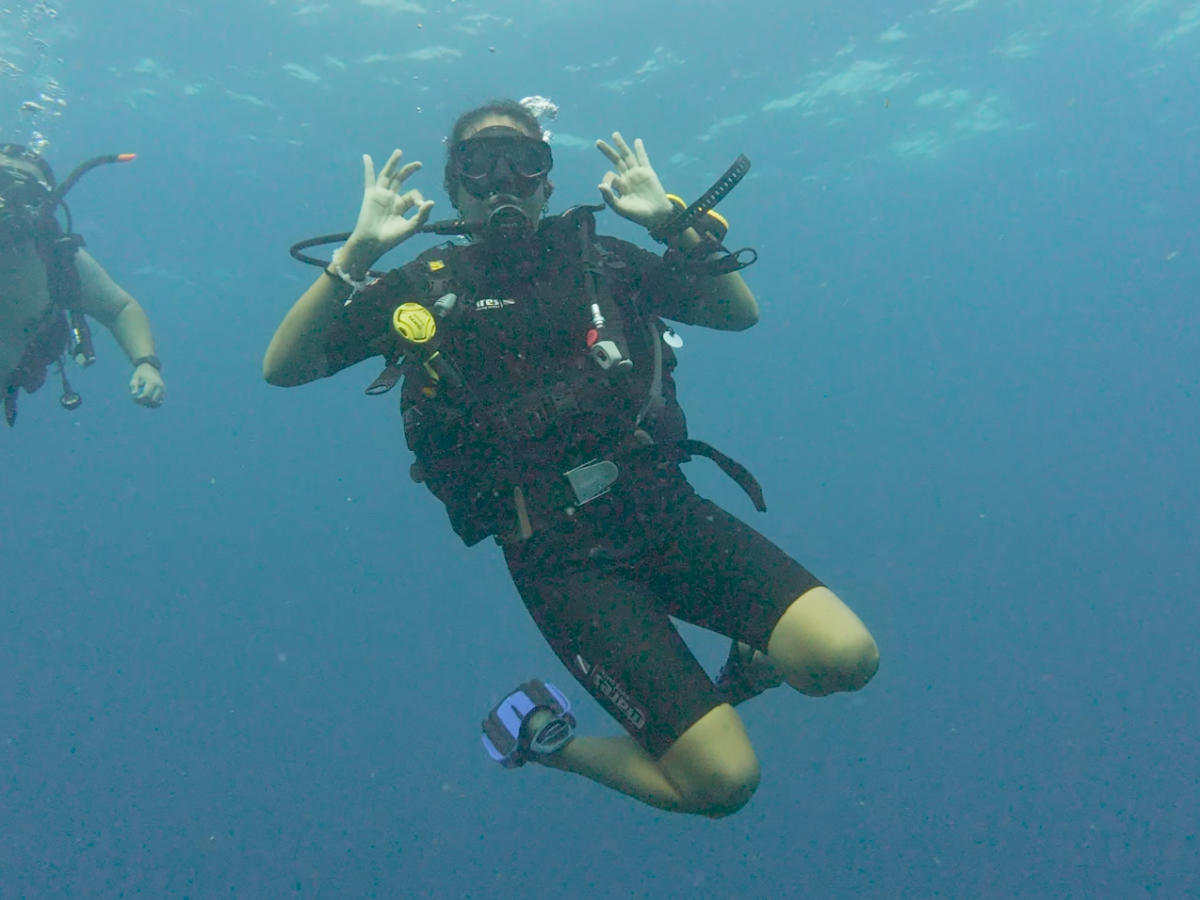
Each morning of the course, you meet your instructor and two or three dive buddies. Days one and two open with an hour of theory before two training dives to practice your skills. Some schools start you in a pool, others take you straight to a calm, shallow beach before working up to slightly deeper reefs. Day three is where it all comes together: the “fun dives,” where you apply everything you’ve learned with real confidence.
I would suggest choosing the program based on what you’re more comfortable with. I chose Dive Onda because I wanted to train in the sea from day one! That first day was the hardest for me — using the gear for the first time and getting used to breathing underwater took some adjusting. But by the second day, I really started to get the hang of it. Day three is when they dropped us into the middle of the deep blue sea, and let me tell you, it is thrilling. You’ll likely be surprised, like I was, how fast the skills click and how quickly real confidence builds underwater.
Why go scuba diving in Koh Tao, Thailand?
Thailand, and Koh Tao specifically, is one of the best places in the world to learn diving. It’s a small island in the Gulf of Thailand that’s become a major global diving hub, so you’ll have no shortage of dive schools to choose from. Beyond the practicalities, it’s simply a gorgeous, lush island with stunning beaches, around 30 distinct dive sites, crystal-clear high-visibility water, and comfortably warm temperatures both in and out of the sea.
It’s also one of the most affordable places in the world to get scuba certified, and the calm conditions make it especially beginner-friendly.
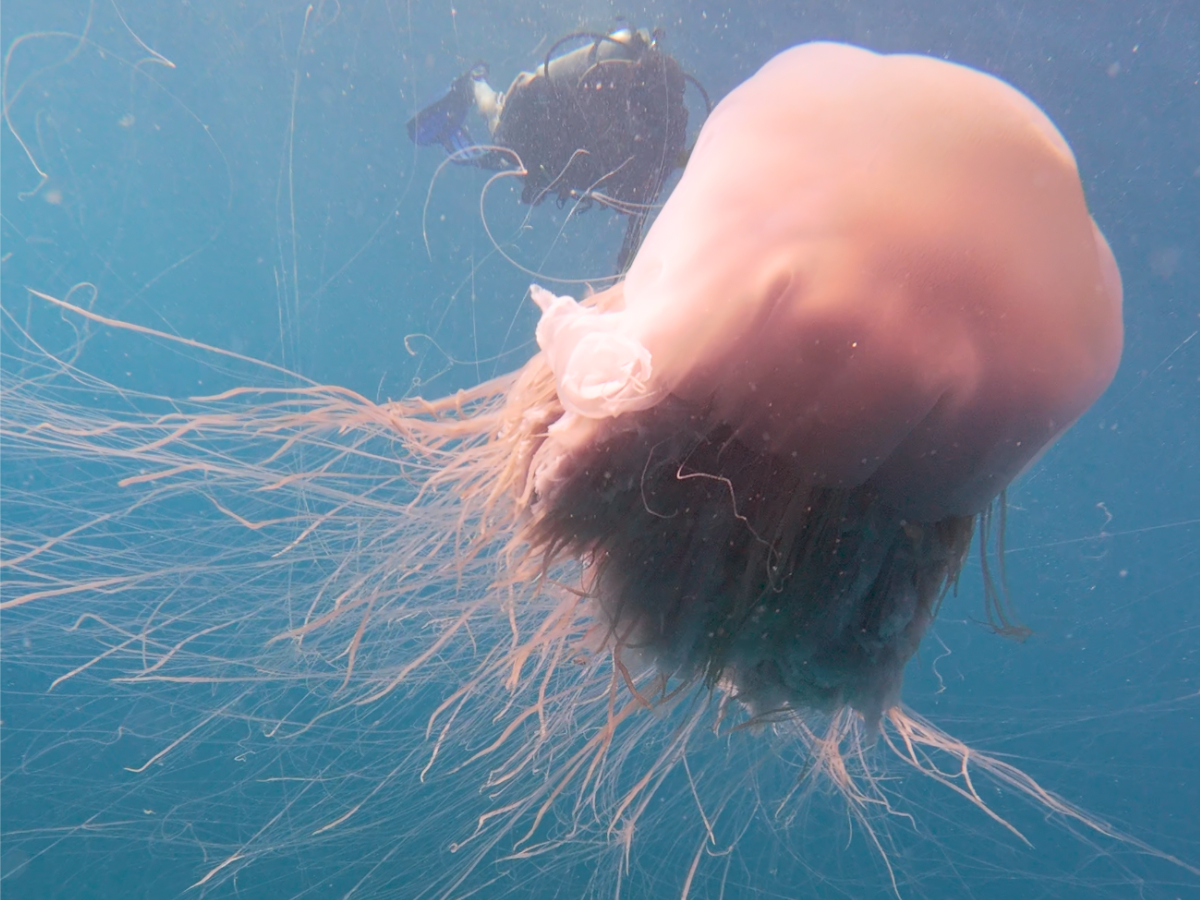
My group and I were lucky enough to encounter a mind-blowing lion’s mane jellyfish and a blue-spotted stingray, among the thousands of other colorful creatures thriving in the surrounding reefs and pinnacles. If you’re luckier than we were, you might even spot a whale shark, which is not uncommon around here.
My takeaway
Two weeks ago, I was lying awake convinced I’d forget how to breathe underwater. Now I have a certification card that says otherwise, and a new hobby unlocked.
As I took deep inhales and exhales underwater, settling into the rhythm of my breath, the experience became far more meditative than intimidating. If fear got the last say, I wouldn’t have tasted the unmatched feeling of descending into the silence of the water world and becoming weightless, floating through Mother Earth’s womb. I wouldn’t have gotten a glimpse at just a few of the stunning life forms thriving in the vast ocean that we know so little about. I also wouldn’t have known that I was absolutely capable of going through with it and coming out the other side, even more alive.
If diving’s been sitting on your bucket list too, consider this your sign to finally book it. Go on and take the plunge, you won’t regret it!
— Ghina F.